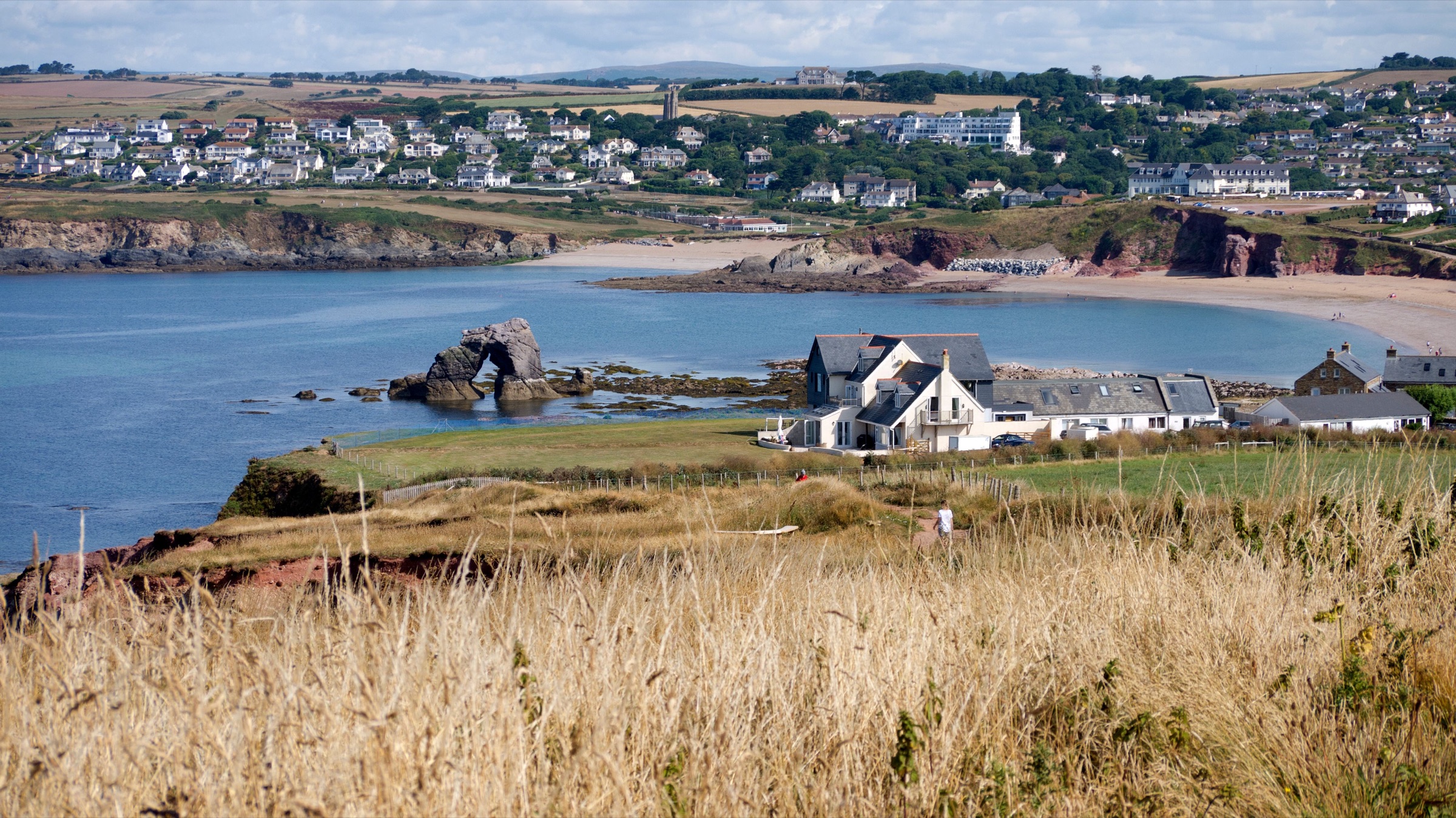
Salcombe sits on what looks like an estuary and technically isn’t one. The Kingsbridge Estuary is a ria, a drowned river valley flooded by rising sea levels rather than carved by the modest streams that feed it, which is why it looks so much bigger than anything currently running into it could ever have carved on its own. A dog walking either bank is walking beside water considerably older and stranger than it looks from the quayside.
The estuary and the ferry crossings
Two ferries cross it, and a dog can take either, which is one of our favourite things about Salcombe over most of the other estuary towns in this collection. The passenger ferry from Fisherman’s Cove runs across to East Portlemouth, a short crossing in an open motorboat that connects straight onto the South West Coast Path on the far side. The other, from the town centre to South Sands, ends with a curiosity: a sea tractor, a passenger platform mounted on tractor wheels, drives out into the shallows to meet the boat so nobody has to wade ashore with a wet dog in tow. Check current dog policy on board either service before you rely on it, since ferry operators set their own rules and can change them between seasons.
The beaches, and how they differ
The beaches split cleanly by which bank they’re on, and it’s worth knowing which side you want before you commit to a ferry crossing. East Portlemouth’s side holds Mill Bay, Cable Cove, where a cross-channel communications cable once came ashore, Small’s Cove and Fisherman’s Cove itself, all quieter and less developed than the town side. Salcombe’s own North Sands and South Sands sit on the west bank, with South Sands the more sheltered of the two and a repeat Blue Flag winner, which means the same seasonal dog restriction covered elsewhere in this collection applies there through the busiest months. East Portlemouth carries no such accreditation on most of its coves, fewer restrictions but fewer facilities too, worth bearing in mind if a full day out there means needing somewhere to buy lunch.
Fort Charles and the fruit schooners
Fort Charles, now a ruin at the southern edge of town, was built to defend the estuary under Henry VIII and held out for five months against Parliamentary forces in 1646, the last Royalist stronghold in Devon to fall, the same year and almost the same length of siege as Pendennis Castle across the county line in Cornwall. It was deliberately destroyed on Parliament’s orders once it surrendered, which is why what’s left today is a ruin you can walk through rather than a working castle you’d have to pay to enter.
Salcombe built its fortune on speed rather than size, and you can still feel the town’s relationship with boats in the working waterfront it hasn’t quite let go of. Through the nineteenth century, local yards turned out the Salcombe Schooner, known as the Salcombe Fruiter, a fast, lightly-crewed vessel built specifically to race fresh fruit, oranges and lemons from the Azores, pineapples from the Caribbean, home before it spoiled. The trade was as dangerous as it was profitable: contemporary accounts put the losses among Salcombe’s own fleet, wrecked with all hands over the decades this trade ran, at close to half. The last of the big wooden fruiters was launched from the estuary in the 1880s, undercut by iron steamships that didn’t need to outrun a piece of fruit, and the same boatyards that built them are still building and repairing boats along the same stretch of water today, just smaller ones.
The coast path either side of town
From Overbeck’s, a National Trust house and garden above South Sands built by the eccentric inventor Otto Overbeck, the coast path climbs out toward Bolt Head and Bolt Tail, exposed cliff walking with views back over the estuary mouth. A four-masted sailing ship, the Herzogin Cecilie, ran aground near here in 1936 and was beached at Starehole Bay below the path. Two other wrecks lie offshore the same stretch of coast: a seventeenth-century vessel carrying four hundred Moroccan gold coins, and, older than either, a Bronze Age ship, one of only three ever found in British waters, roughly three and a half thousand years older than anything else mentioned on this page. Sheep graze parts of the clifftop approach, so the lead goes on well before the open cliff sections begin.
Where to base yourself
Salcombe sits within reach of the wider Devon collection we curate, close to Dartmouth. Both towns built their fortunes on fast boats and both still work the water today, but walk either one with a dog and they don’t feel remotely alike.