We’ve walked a fair amount of the South West Coast Path over the years, but the Budleigh Salterton to Otterton circular has quietly become one we keep coming back to. A single morning covers a surprising amount of ground: the River Otter for the first hour, a working watermill older than the Domesday Book, an honesty café neither of us knew existed until we were standing in front of it, and a stretch of red cliff coast path to finish. If you’re searching for a walk that’s dog-friendly, cafés included, and explores Devon’s coast, this one is a perfect easy-to-intermediate circular.
Setting off from Budleigh Salterton
We parked at the Lime Kiln car park in Budleigh Salterton, right by the mouth of the River Otter, and picked up the well-signposted route from there. Lime Kiln has its own car park, and it's an easy five-minute walk to pick up the main circular.
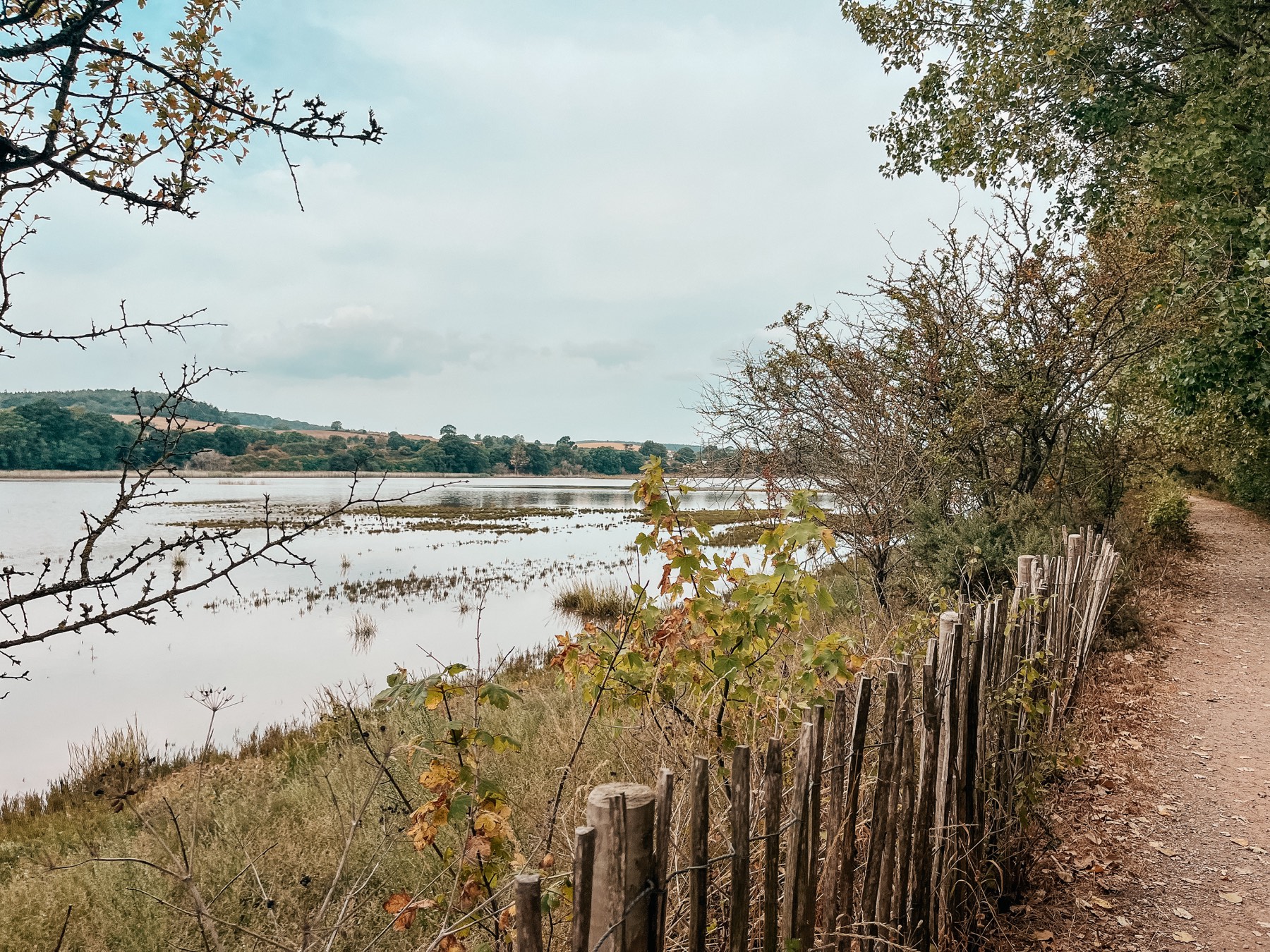
East Devon doesn't get talked about in the same breath as the wilder north Devon coast, and that's part of its appeal: this is a gentler, more domestic coastline, red cliffs and quiet estuaries rather than Atlantic surf, and a circular like this one plays entirely to that strength. The path out of the car park runs along the estuary immediately, reedbeds and open water on one side, a wooded bank on the other, a gentle, unhurried way to start a walk rather than being thrown straight onto a lane.
Along the River Otter
From the estuary the route turns inland and follows the River Otter for the best part of an hour, and this stretch alone would be worth the walk. The path ducks in and out of tree cover, the water running clear and shallow enough in places to see straight to the pebbles on the bottom, and we lost count of how many fish we spotted holding steady in the current. It's a popular stretch with other dog walkers too, and our dog met more dogs along this single riverside mile than on most whole walks elsewhere, all of it easy, off-lead stuff on a well-used path.
The going underfoot is flat the entire way, which makes this the section to save your dog's energy for the climbing later on, rather than one to rush through.
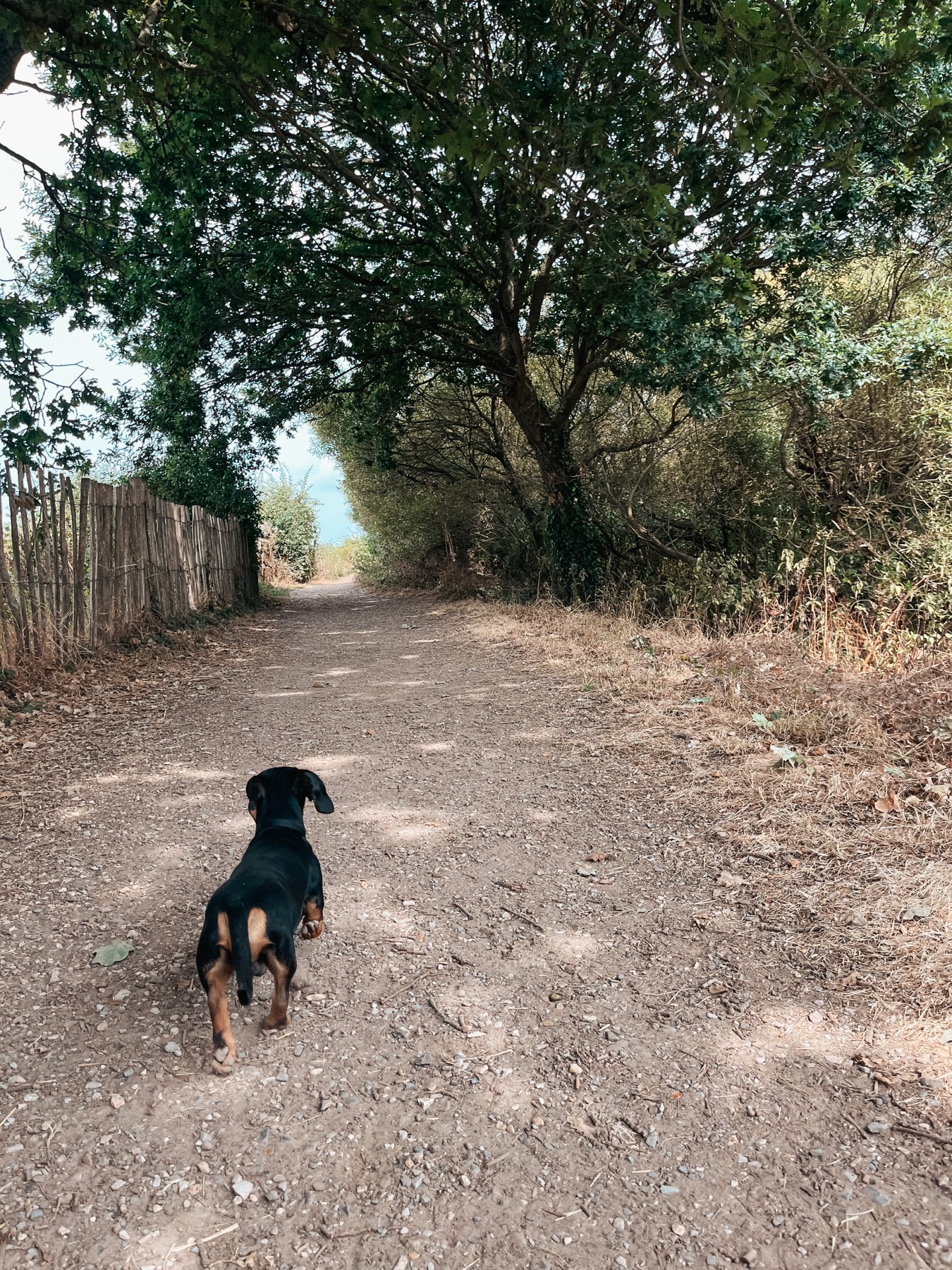
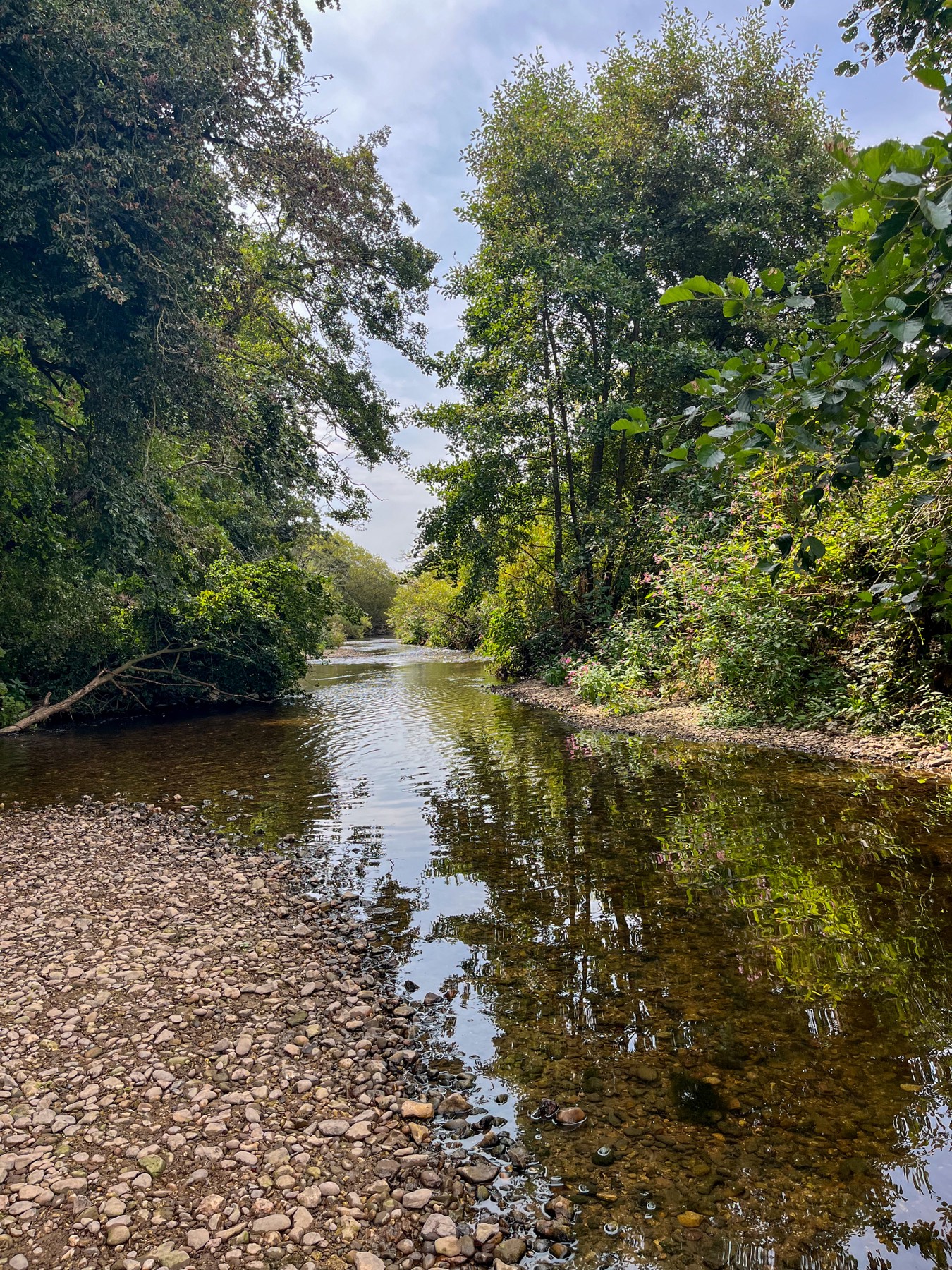
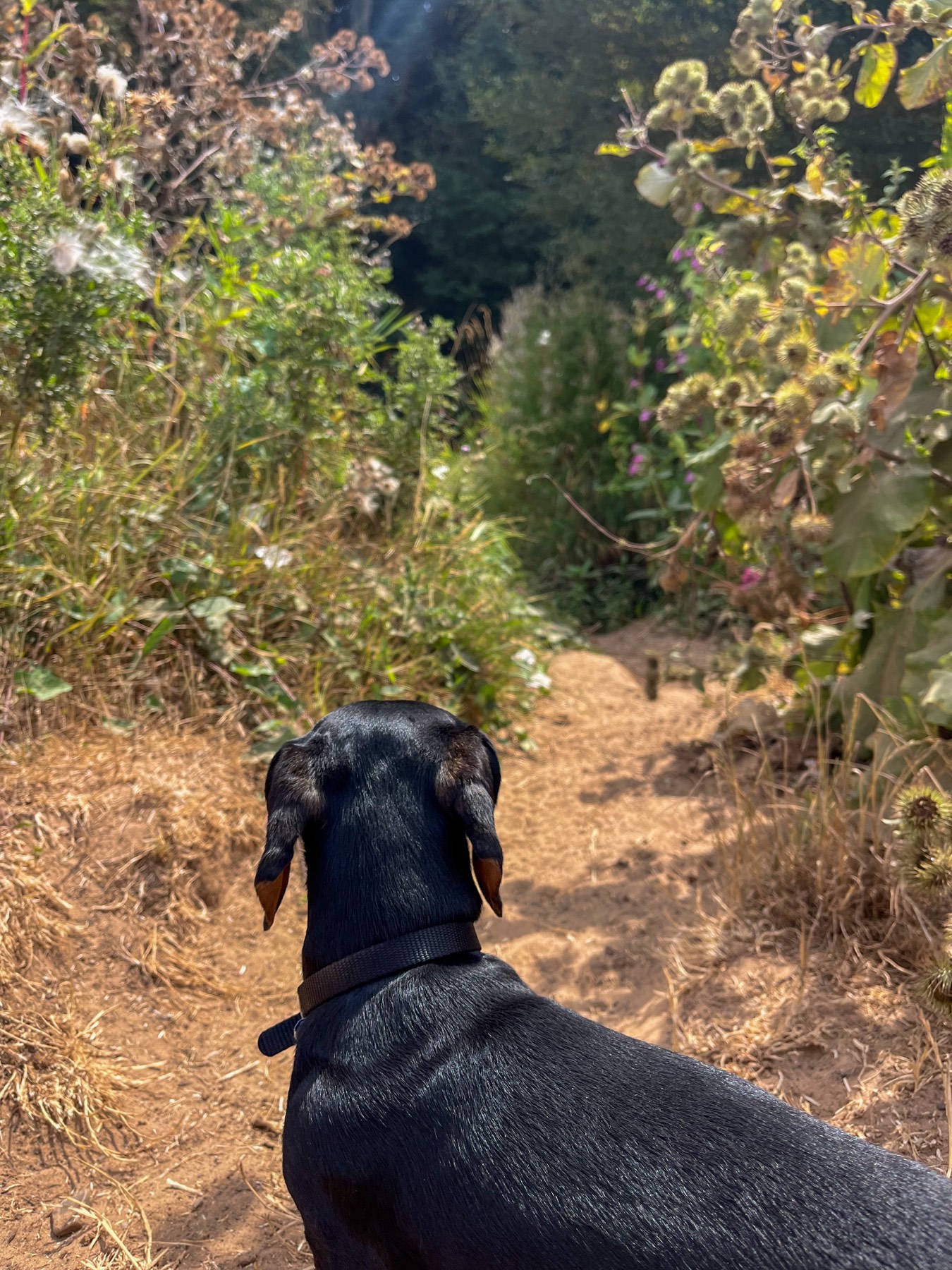
The wooded riverside path, clear water good for spotting fish, and the narrower stretches through wildflowers
Otterton, and a stop at the Mill
About an hour in, the path brought us into Otterton itself, cob and thatch cottages lining the street, a place the architectural historian Nikolaus Pevsner once called an instructive example of local building running from the sixteenth century onwards. The name is Saxon, Oetre for water and ton for farmstead, and the settlement was already large enough to be worth recording by name in 1086.
There's been a working mill here since the Domesday Book of 1086, when the land passed to the abbots of St Michel in Normandy, and by the eleventh century Otterton was unusual enough to have three separate corn mills of its own. Milling here continued in various forms for centuries, corn giving way to fulling cloth at points along the way, before the whole complex fell into disrepair through the middle of the twentieth century.
It was restored in 1977 and still mills stone-ground wholemeal flour every fortnight today, using water from the same river we'd just been walking beside, alongside a bakery and a couple of small galleries. We stopped for a Devon cream tea in the courtyard, which felt entirely earned after the riverside stretch, and the dog was just as welcome at the outside tables as we were.
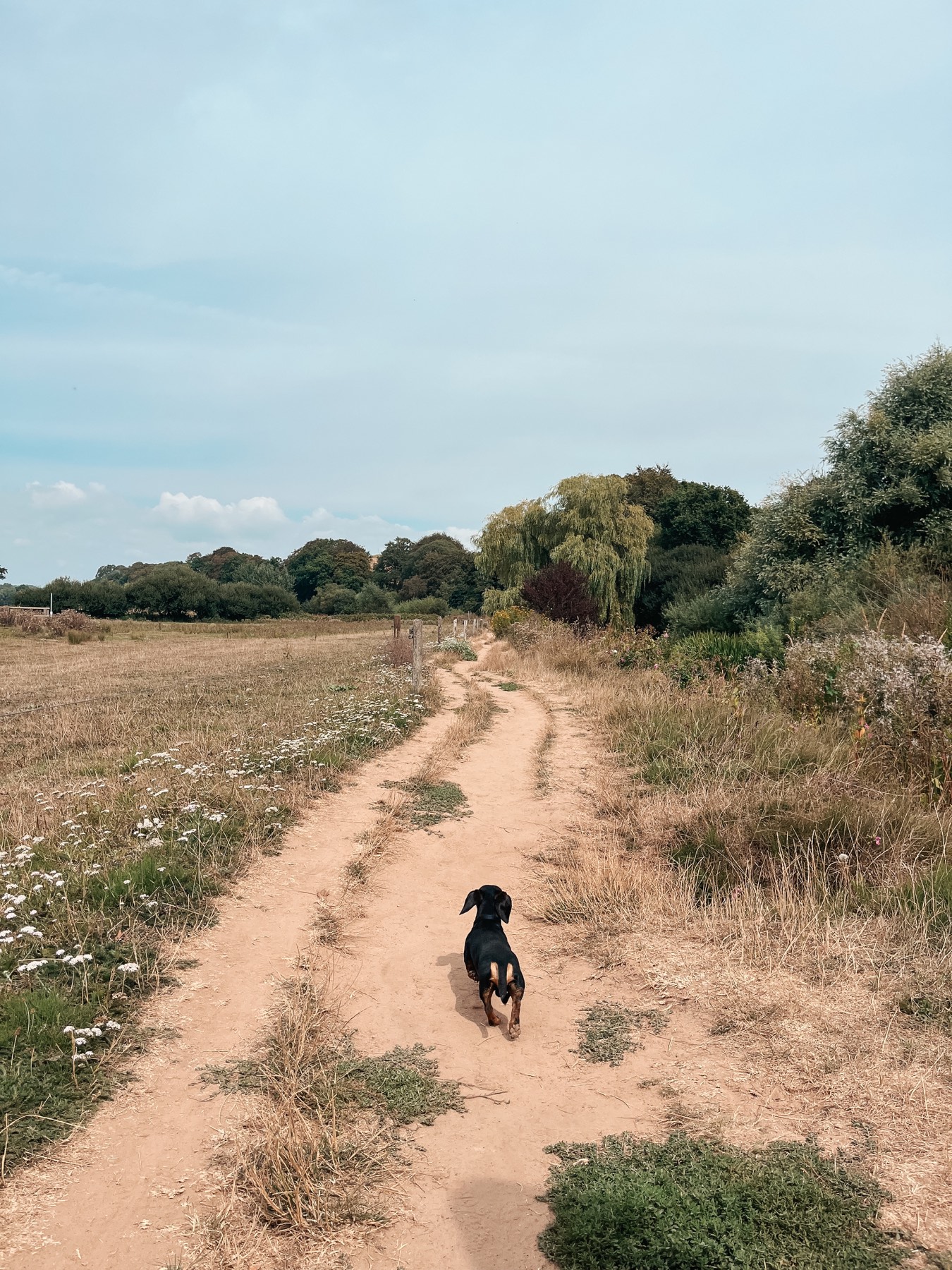
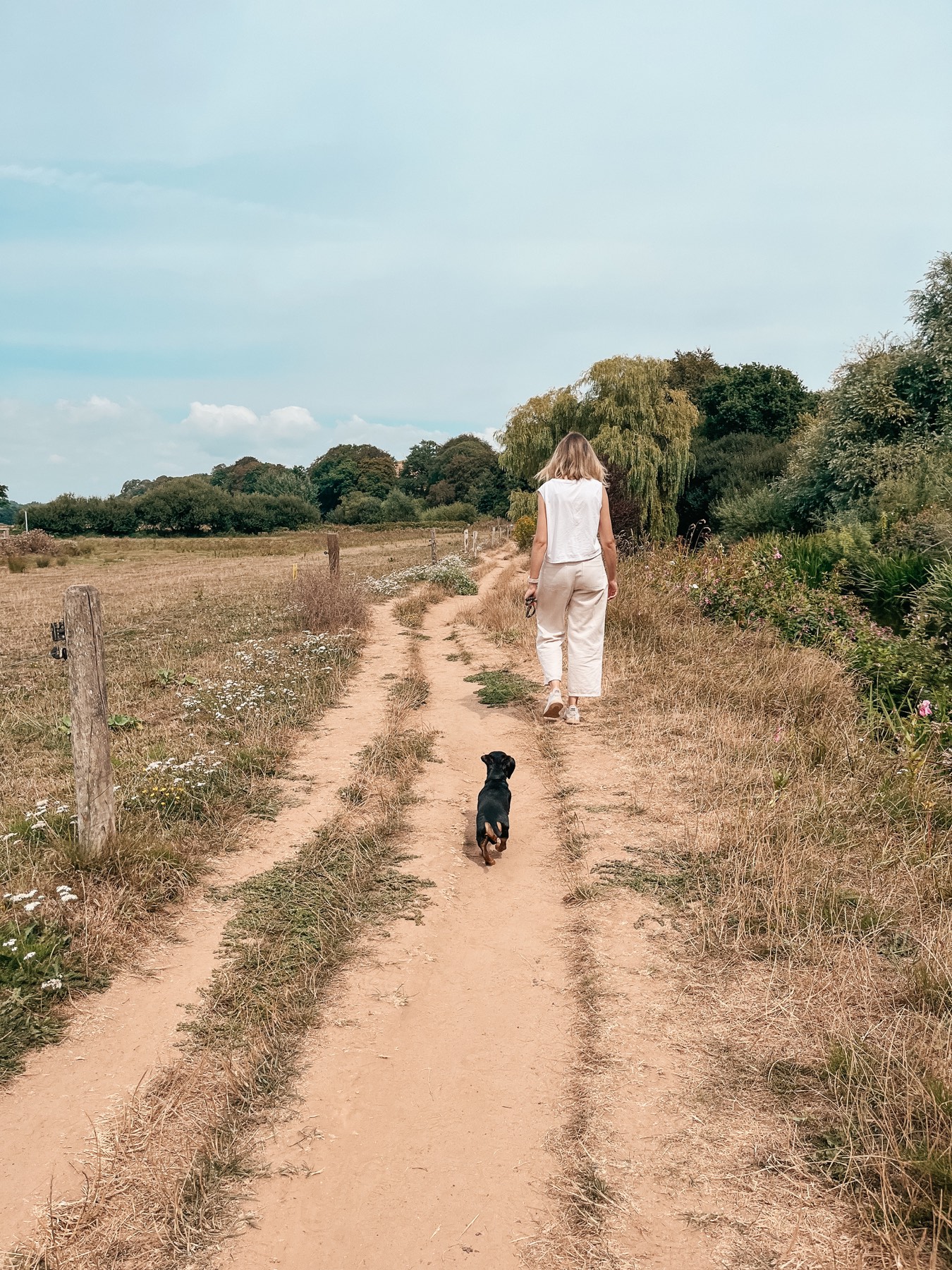
The willow-lined track into Otterton, on the approach to the Mill
Up the lane to an honesty café
From Otterton the route continues through the village and up a country lane to join the coast path itself, well signposted the whole way with East Devon National Landscape markers confirming you're still on track. About halfway round the full circular, we stumbled on an honesty café at Stantyway Farm, a converted shed with an "open" sign chalked on a board and a metal dog bowl of water waiting outside on the gravel. We stopped for a glass of water and an ice cream each, paid into the honesty box, and carried on down a short lane before rejoining the walking route. An unplanned stop like this is what turns a good walk into a memorable one, and we wouldn't have known it was there without simply walking past it.
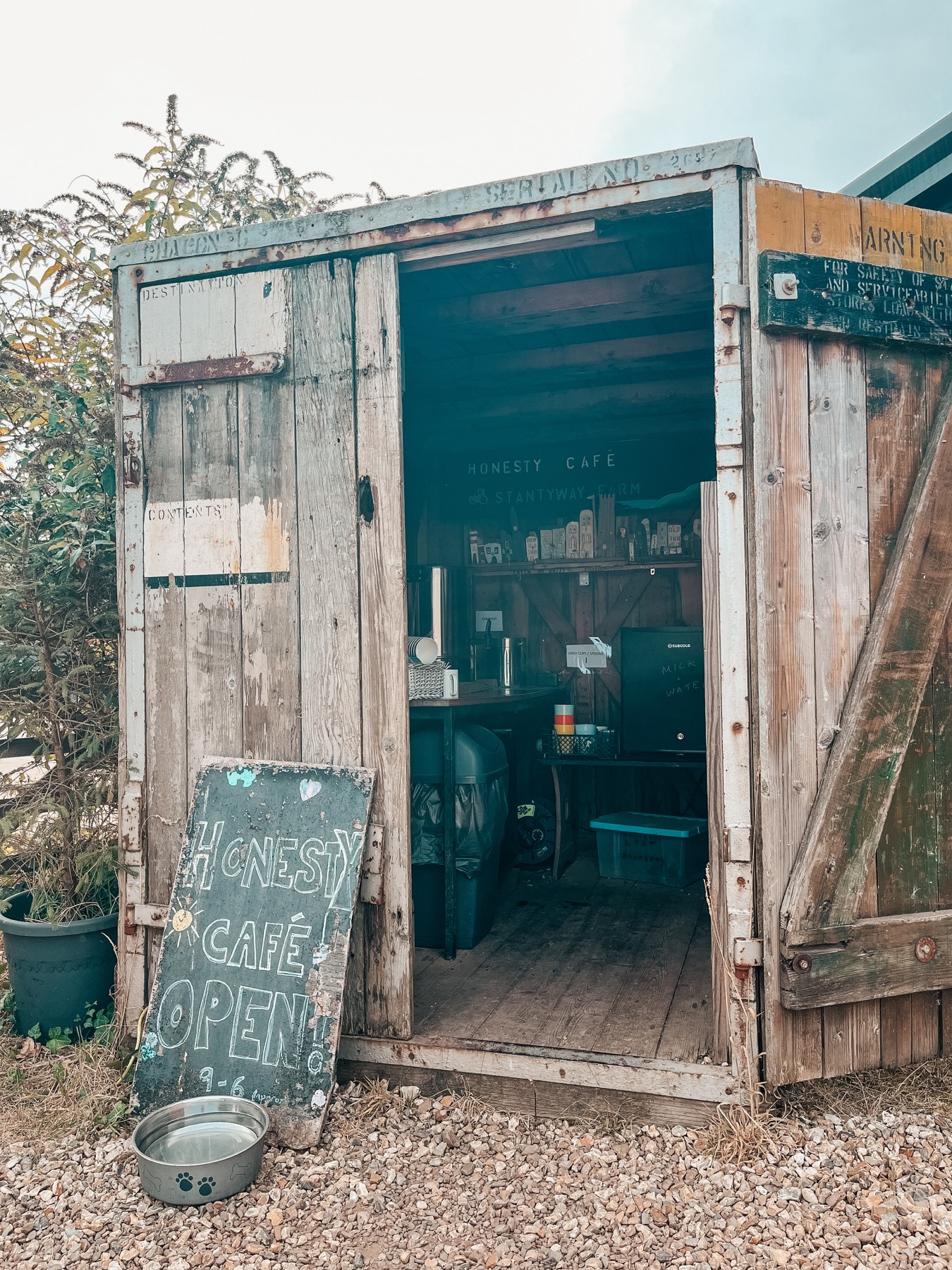
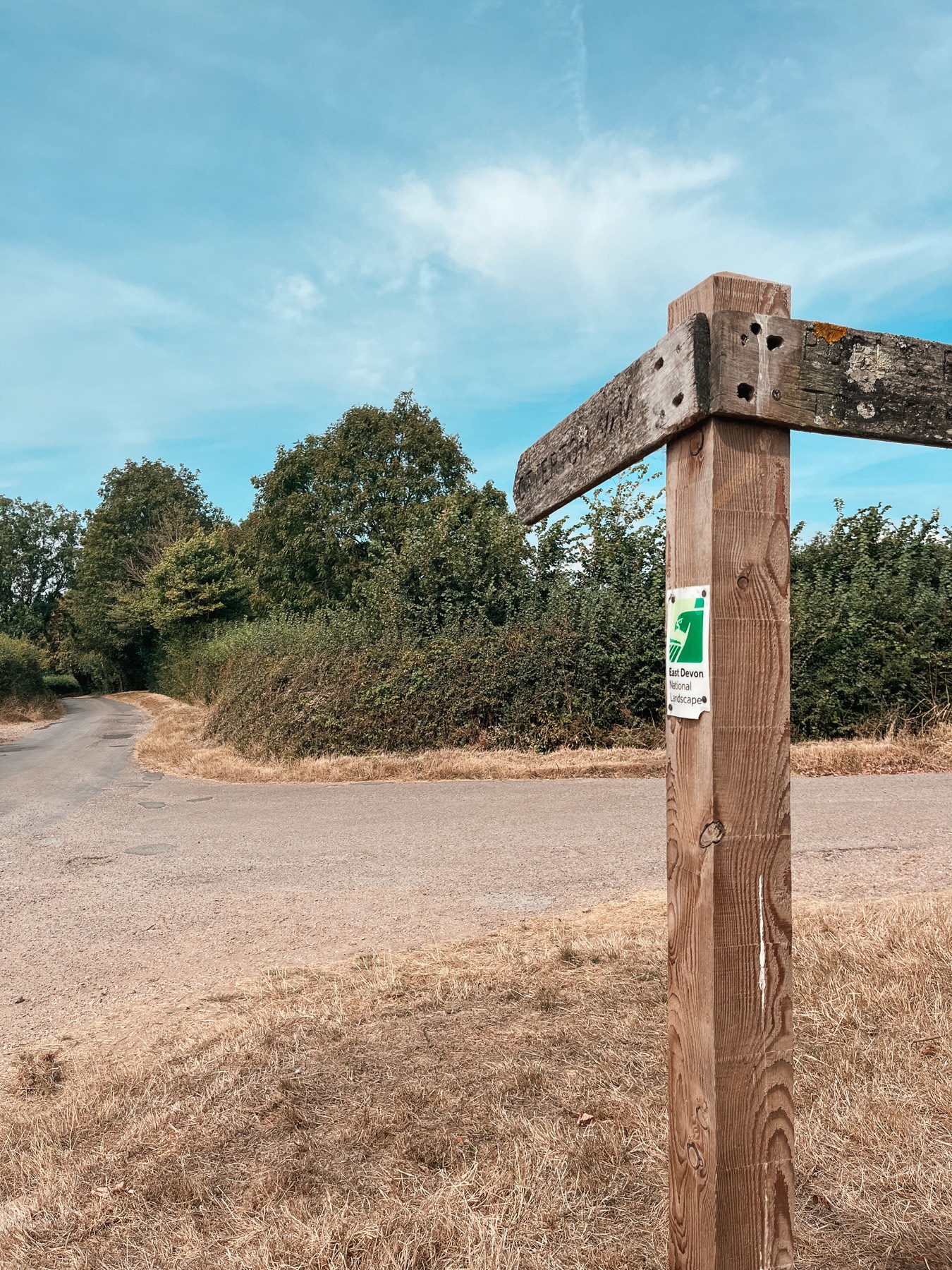
The honesty café at Stantyway Farm, roughly halfway round, and the signage confirming the route back to the lane
Back on the coast path: Brandy Head and the sunflowers
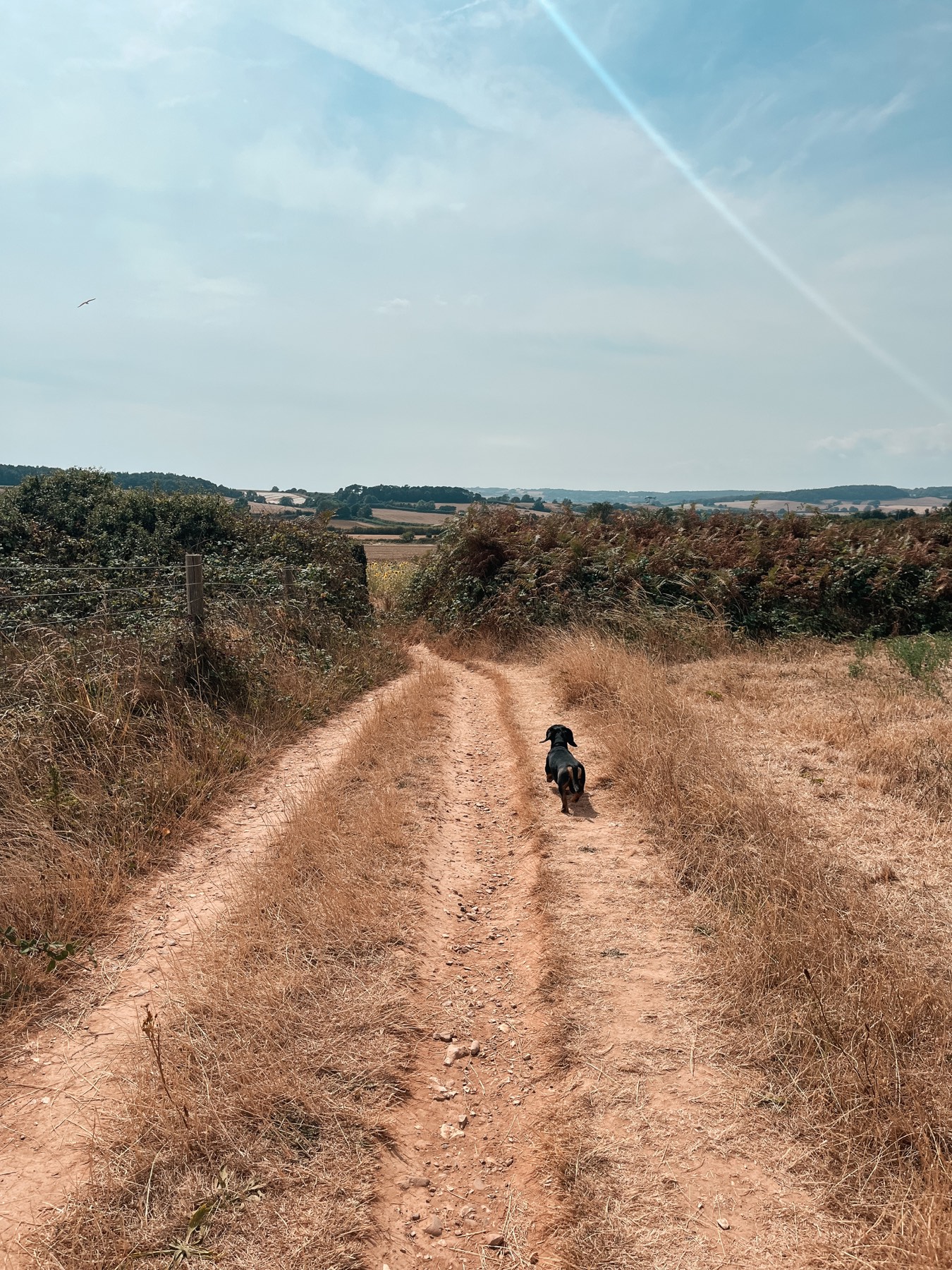
The short lane brought us back onto the South West Coast Path itself, first along a hedge-lined farm track that happened to run right alongside a full field of sunflowers, an unexpected bit of colour we hadn't planned for and were glad we caught.
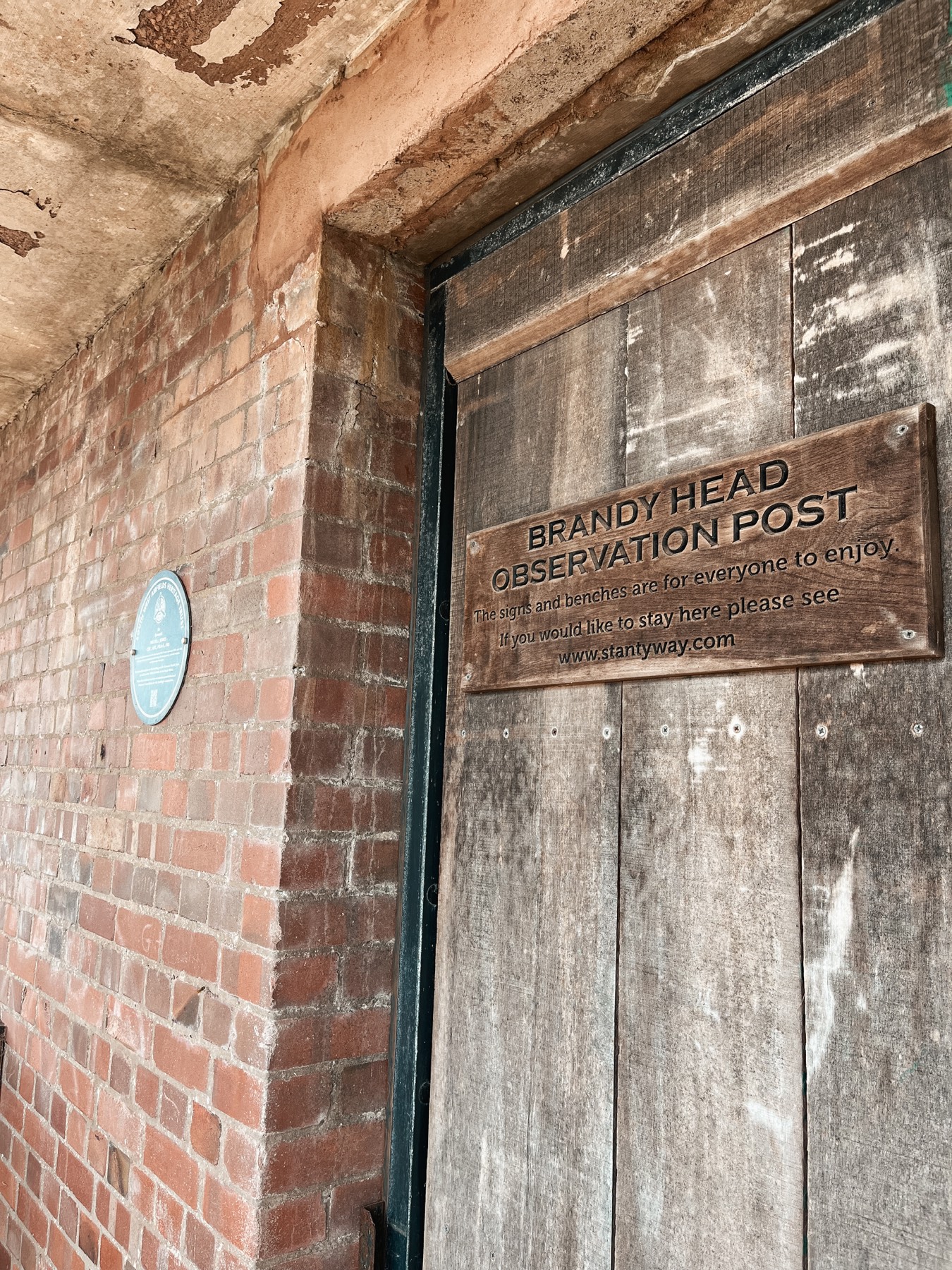
A little further on the path passes Brandy Head Observation Post, a brick and concrete lookout built during the Second World War and still standing on the clifftop today, one of several structures along this coast built for exactly the same reason the coast path itself hugs the water so closely, a theme we've written about in more detail in our short history of why the coast path exists. A sign on the door explained that it's now let out as holiday accommodation by Stantyway, the same farm running the honesty café we'd stopped at not long before, one working farm touching two very different parts of the same walk.

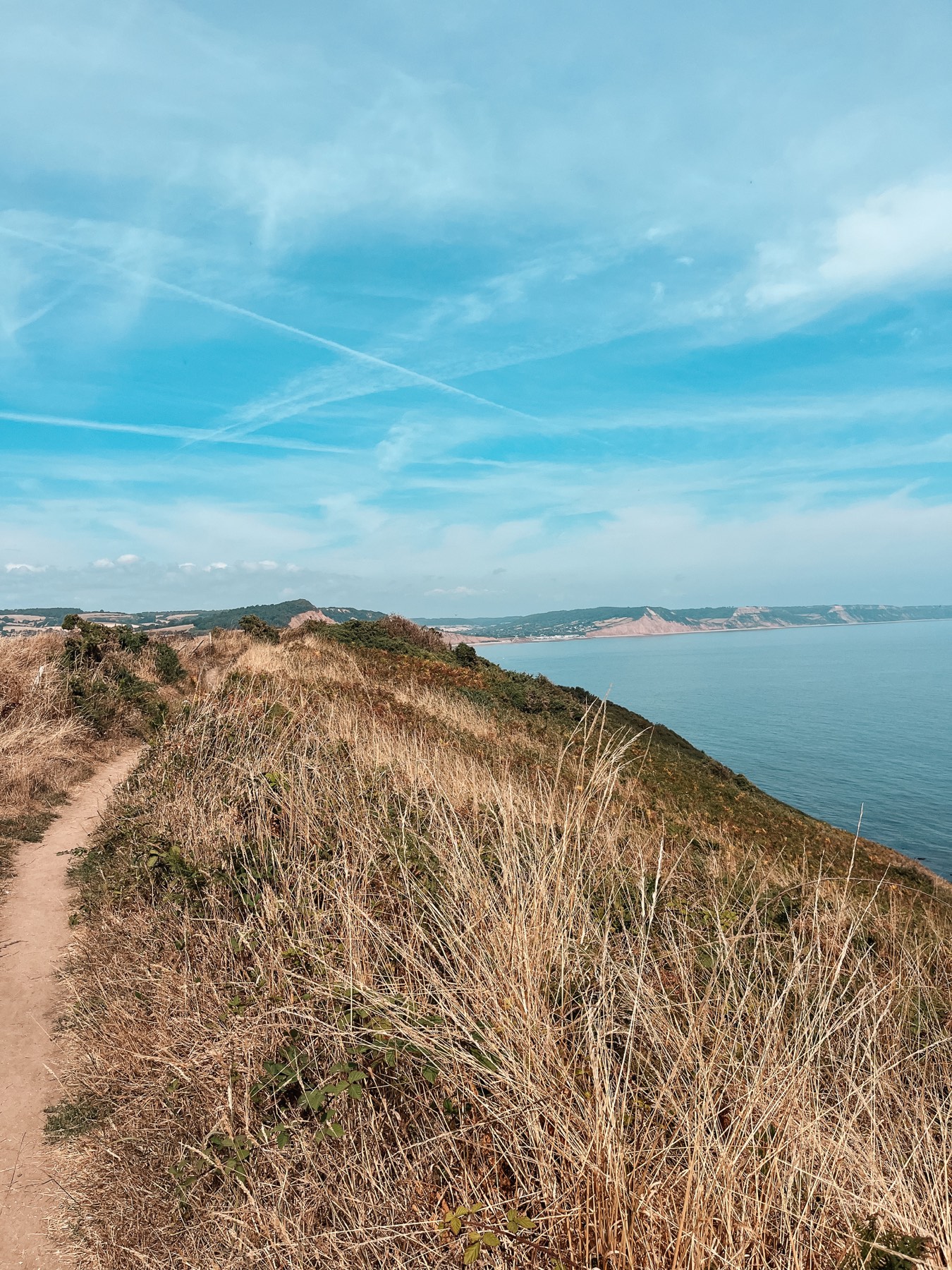
The view back to Sidmouth and Budleigh
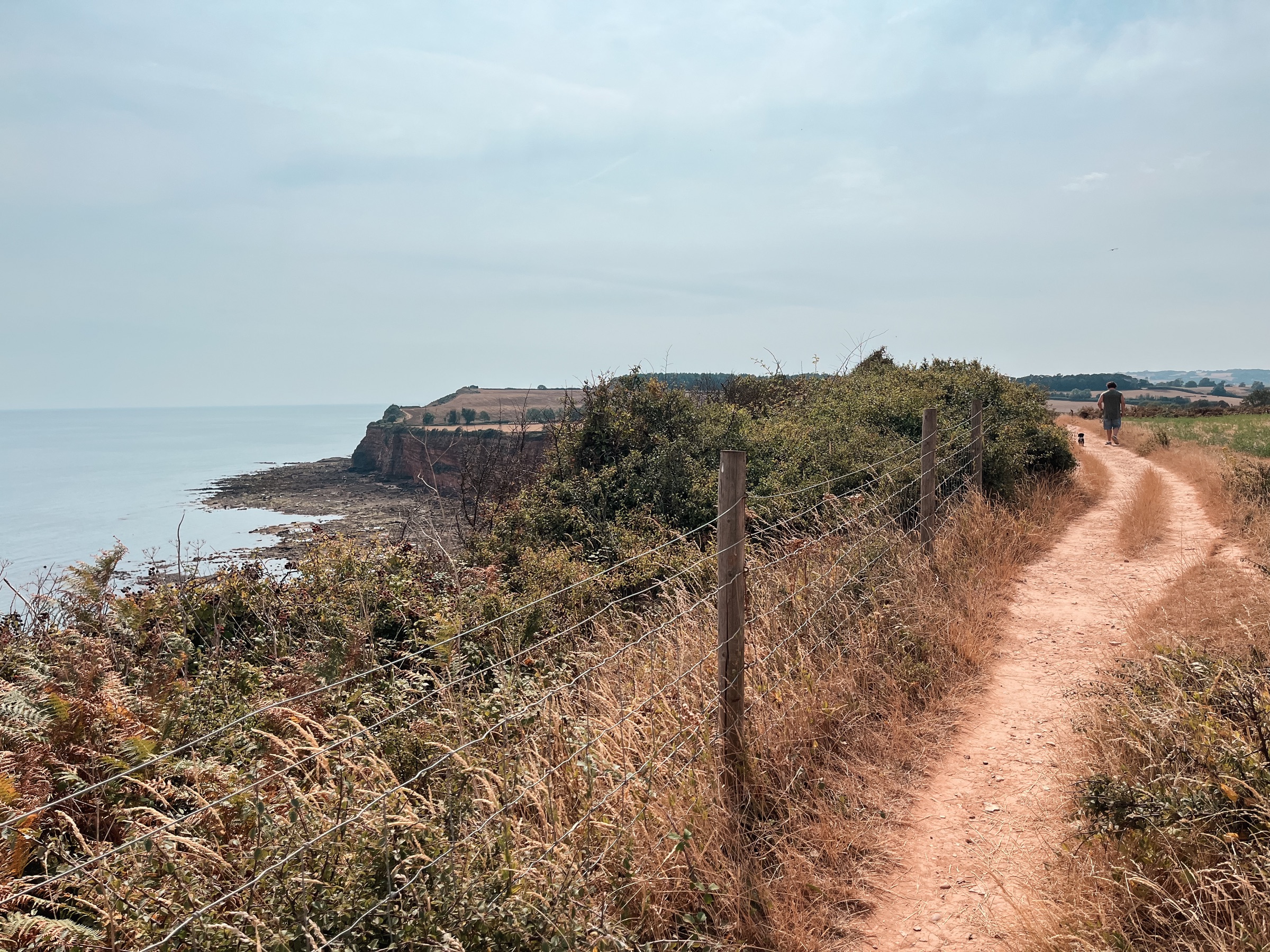
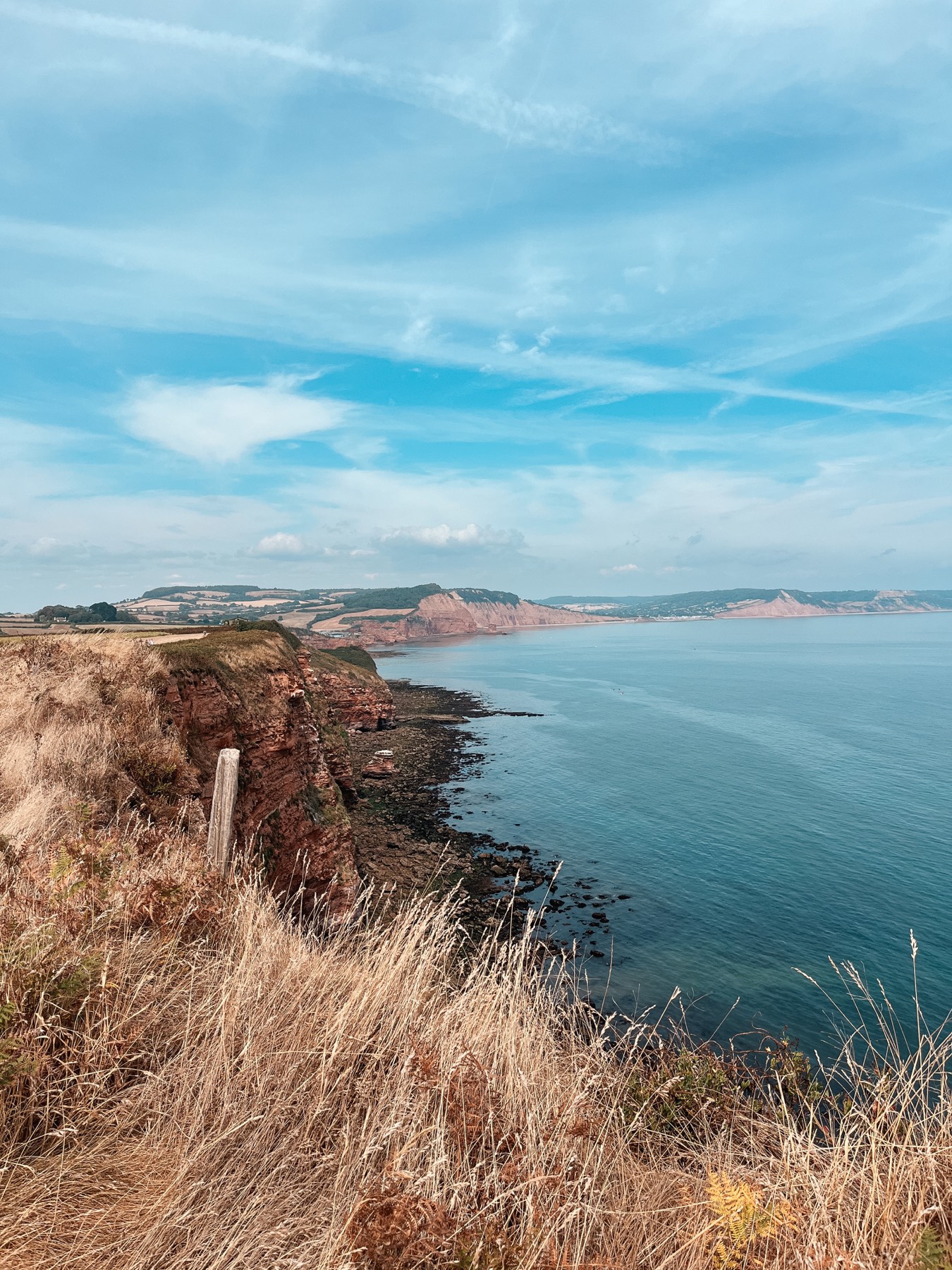
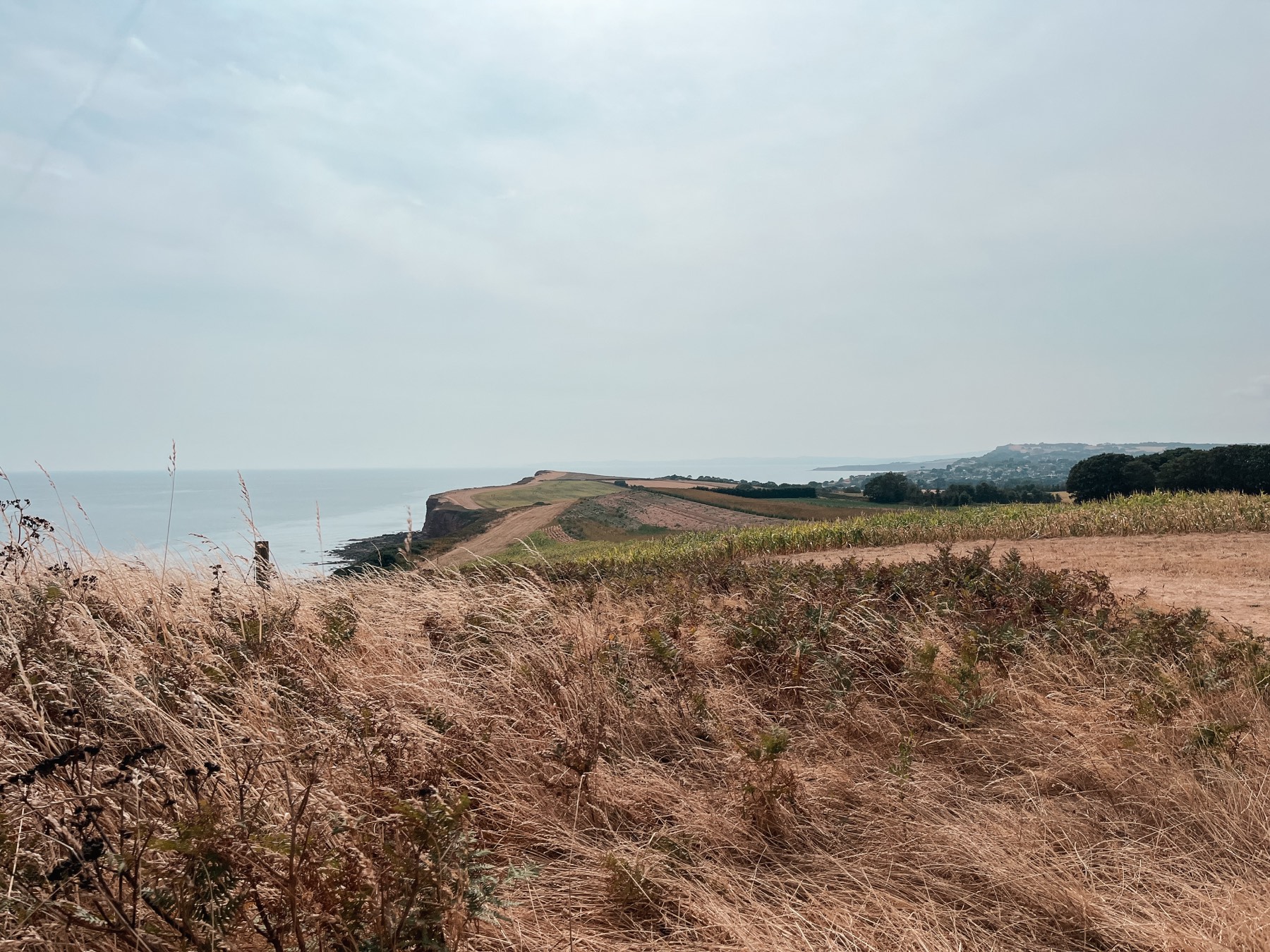
This is the stretch we'd send anyone here for. The coast path opens right out along the clifftop, red sandstone dropping away to the sea on one side and farmland rolling back on the other, with Sidmouth laid out along the bay in one direction and Budleigh Salterton in the other. This whole stretch of coast carries the Jurassic Coast name as a World Heritage Site, though the cliffs directly beneath your feet here are older than that, Triassic red sandstone laid down around 250 million years ago when this part of Devon was closer to desert than coastline.
The cliffs themselves are dramatic regardless of exactly which period they belong to, caves and undercuts visible in the rock face from the path, a scale that photos undersell. If you're weighing up whether this part of Devon's coast is worth a detour with a dog, this is the twenty minutes that answers the question.
Down to the estuary, and home
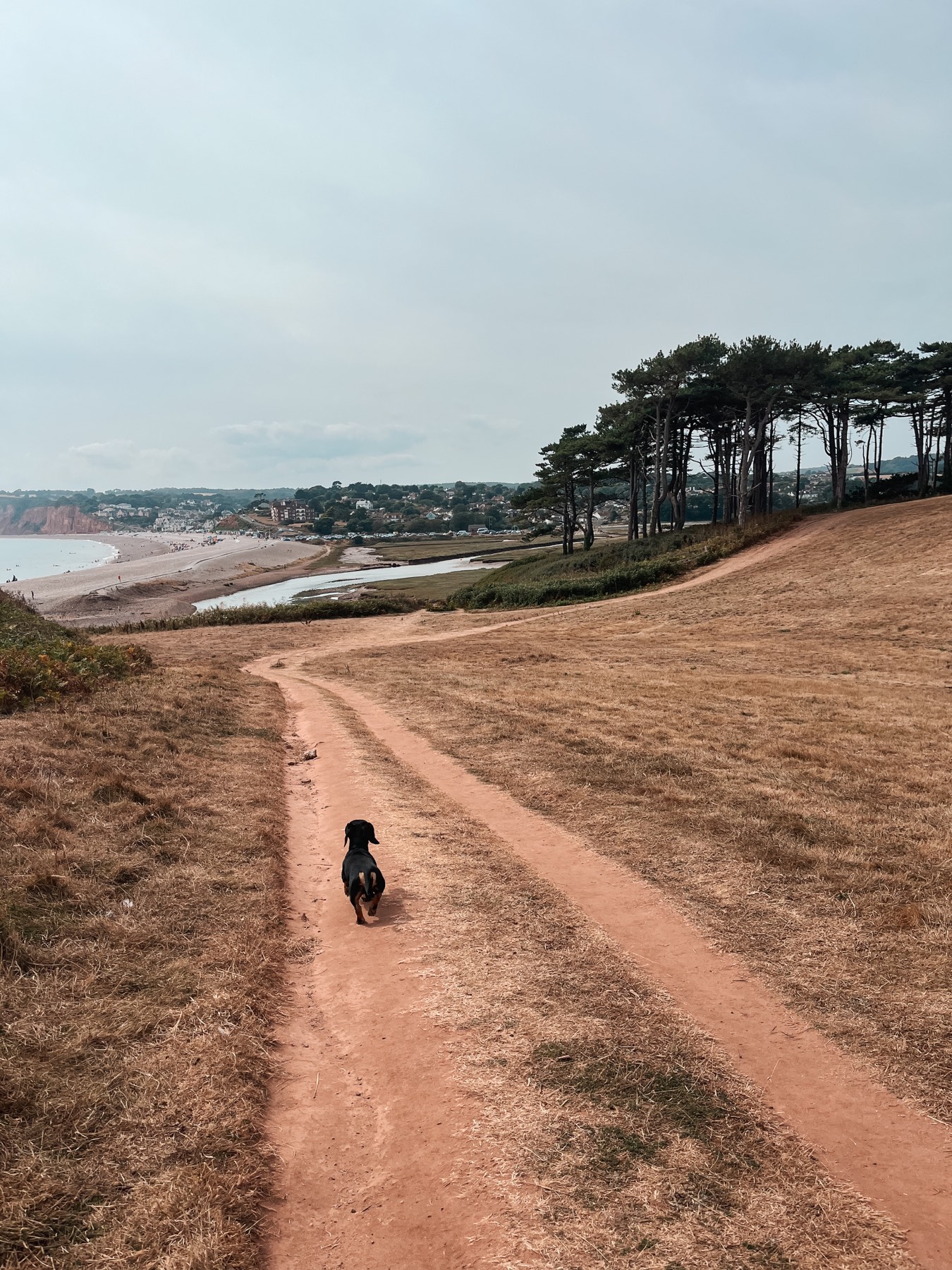
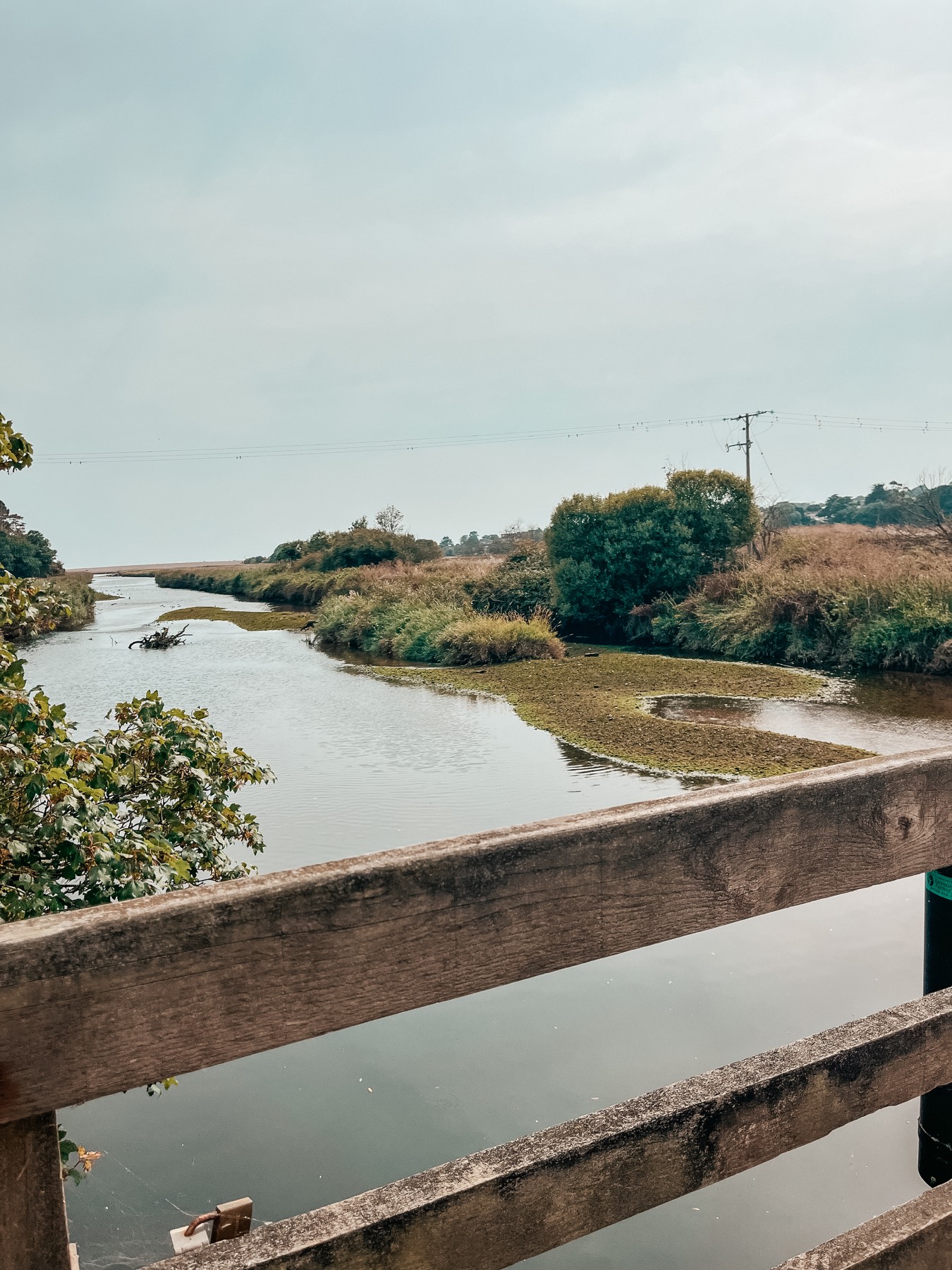
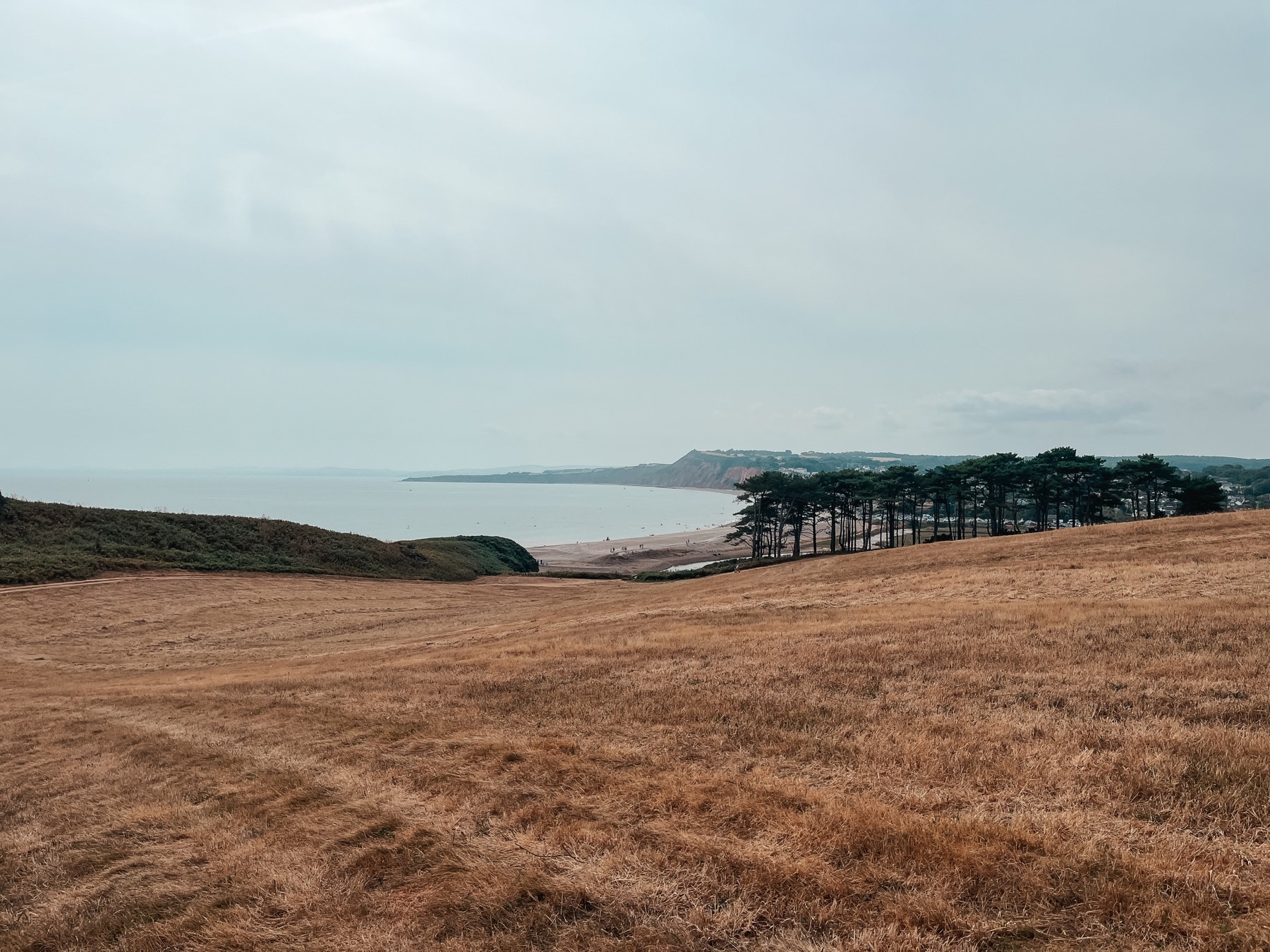
Eventually the path drops down toward Budleigh Salterton itself, pines marking the edge of town and the beach and estuary mouth opening up below. We crossed back over the River Otter on the footbridge close to where we started, the same estuary that had been reedbed and open water on the way out now busy with the last of the afternoon's dog walkers and birdwatchers.
The Otter Estuary Nature Reserve either side of that footbridge is a Site of Special Scientific Interest with over 120 recorded bird species, and the wider River Otter carries a bigger story behind it. A family of beavers turned up somewhere upstream of here in 2013, nobody officially sure how, and rather than being removed they became the subject of a five-year licensed trial run by the Devon Wildlife Trust: the first wild-breeding beaver population in England in four hundred years. By the time the Government confirmed in August 2020 that they could stay for good, that original pair had grown to at least eight breeding territories along the catchment, the first legally sanctioned reintroduction of an extinct native mammal anywhere in England. We didn't spot one ourselves, they keep mostly to dawn and dusk, but knowing they're working this exact stretch of water changes how you look at it.
A final signpost confirmed we had a third of a mile left, and we were back at Lime Kiln not long after.
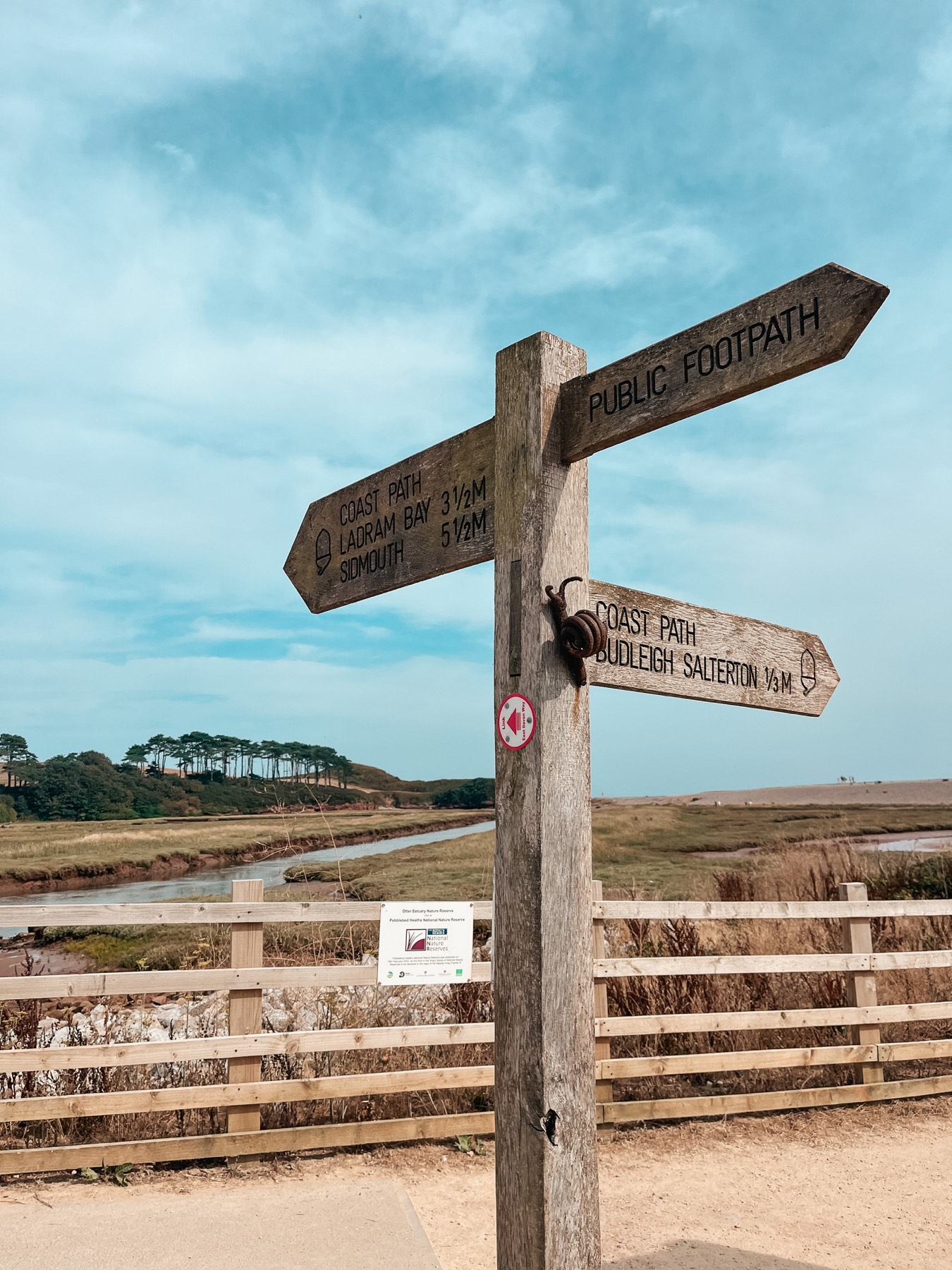
The practical bits
The full circular runs somewhere between seven and nine miles depending on exactly where you join and leave it, three to four hours at an easy pace with stops, with enough climbing on the cliff sections to notice, though nothing a reasonably fit dog would struggle with. We followed the AllTrails route for the Otterton, Budleigh Salterton and River Otter circular but started from Lime Kiln car park rather than the app's default point, which worked out better for parking without losing any of the walk itself.
There are three spots on the route where a dog can get fresh water: the honesty café at Stantyway Farm, Otterton Mill itself, and a tap near the Budleigh Salterton end, though we'd still recommend carrying your own for the stretches between, especially on a warm day with little shade along the clifftop.
Livestock and cyclists share some of the inland sections, so a lead goes on through the farm tracks even though the coast path itself is largely open. Underfoot it's a mix of firm riverside path, farm track and coast path, dry and dusty in summer, a walk that rewards good weather rather than fighting through it.
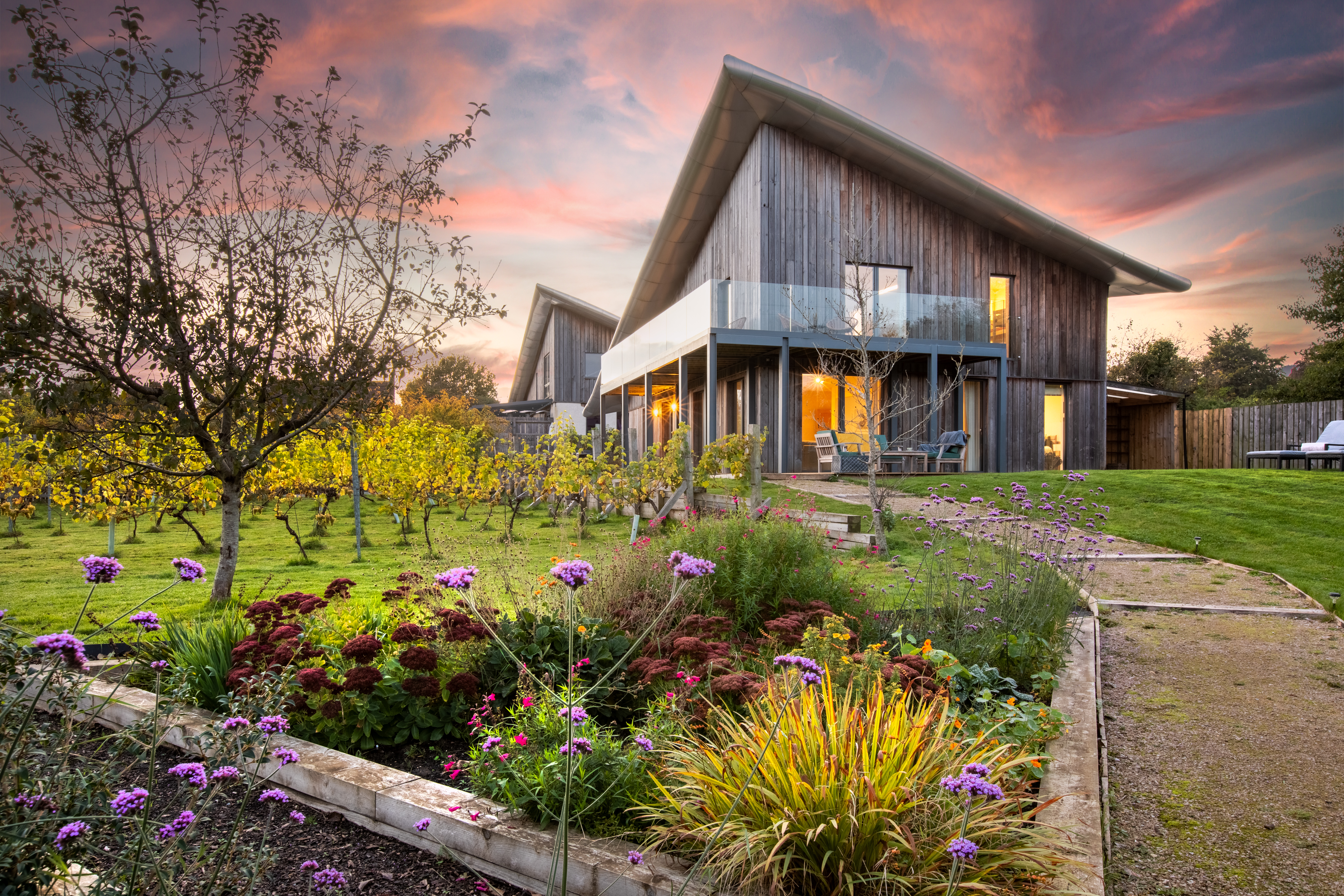
This one's going straight onto our regular summer list, one of our favourite short circulars because it never settles into a single rhythm: river, village, café, cliff, each a distinctly different pace inside the same morning. The cottages we curate across Devon reach into this exact stretch of coast, close enough that a dog could be walking it on the evening you arrive, bags barely through the door.