Cornwall has two coastlines doing two different jobs, and most of what decides where to take a dog comes down to which one you’re standing on rather than which specific beach.
North coast versus south coast
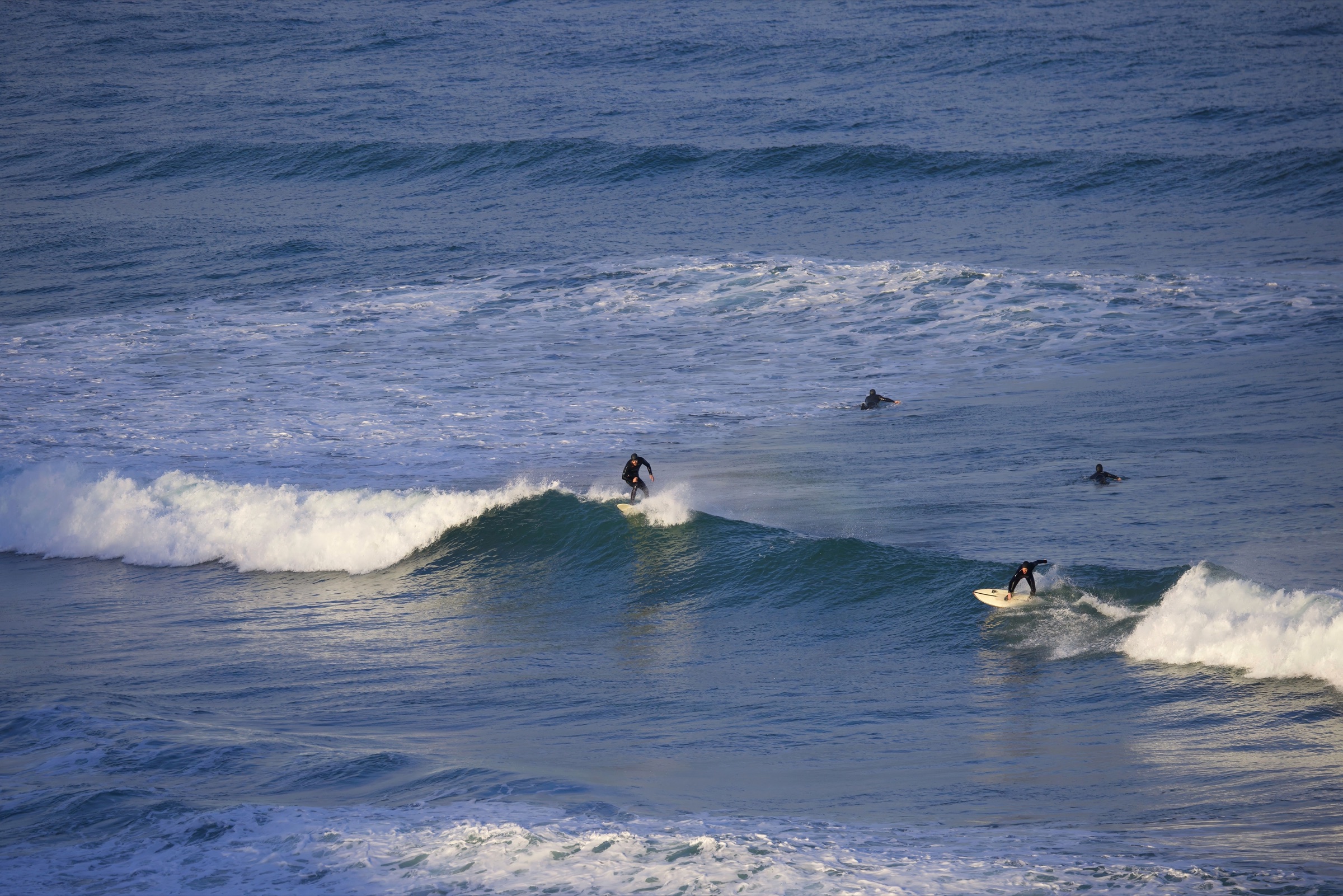
The north coast faces the open Atlantic directly, and the difference in wave size isn’t a matter of luck: dominant swells roll in from the west and south-west across thousands of miles of open ocean before they reach beaches like Bude, Fistral and Sennen, arriving with almost nothing to slow them down first. The south coast sits in the lee of the peninsula itself, so the same swell system that pounds the north coast has already spent most of its energy by the time what’s left of it reaches Falmouth or the Helford River. It’s the shape of Cornwall doing the work, not chance, and it’s why a beach ten miles apart on the two coasts can feel like they belong to different countries on the same afternoon.
The Cribbar, and Cornwall’s more serious surf
That exposure produces some serious surf. The Cribbar, a reef break off Towan Head near Newquay, only breaks on the biggest Atlantic swells, and when it does it’s serious enough to have earned the nickname “the widowmaker” among surfers who know exactly what it can do. A dog doesn’t need to go anywhere near it, but it’s worth knowing it’s there the first time a lifeguard’s flag looks more serious than the beach itself suggests.
North coast beaches worth knowing
Sand that runs for miles at Bude, Fistral, Watergate Bay and Mawgan Porth, with almost nothing standing between the water and open ocean, suits a dog who wants to run flat out and doesn’t mind wind and noise doing most of the talking. Further west, Sennen Cove sits almost at Land’s End itself, the last beach on the mainland before the Atlantic opens out completely, and Portreath, a former harbour that once exported Cornish copper and tin before the mines closed, keeps a similar exposed character with a working past underneath the surf. Harlyn Bay, near Padstow, adds its own layer of history to the same exposed coast: Bronze Age and Iron Age burial mounds sit in the dunes above the beach, over three thousand years old, with finds still emerging from the eroding cliffs as the coastline continues to shift the way it always has.
South coast beaches worth knowing
The south coast is a different proposition entirely, sheltered by the shape of the peninsula itself: wooded creeks, calmer water, beaches at Falmouth, Fowey and around the Helford River that feel more like a lake shore than a sea coast on a still day. We’ve covered several of these places in more depth already, St Ives, Falmouth and Bude among them, and this piece is meant to sit above all of that rather than repeat it: a starting point for working out which coast, and which beach, actually suits the dog you’re bringing.
How access changes through the year
Most Cornish beaches with lifeguard cover run a seasonal dog restriction through the busiest months, somewhere between Easter, or the first of May, and the end of September, though the exact dates are set by the local council and individual towns and reviewed every year rather than fixed permanently. Outside that window the bans lift entirely, and the same beach that’s off-limits at midday in August is open all day through the rest of the year, one of the clearest arguments for planning a trip in the quieter months instead.
Beaches that stay dog-friendly year-round
A handful of beaches skip the seasonal restriction altogether and stay open to dogs all year. Parts of Carbis Bay, near St Ives, hold that status, along with Northcott Mouth just outside Bude and stretches of the Hayle estuary. Falmouth’s own Swanpool handles it slightly differently: dogs are welcome on the sand year-round, just not between 10am and 6pm through July and August, a lighter, time-of-day version of the restriction rather than the full seasonal ban the bigger beaches carry. The pattern behind the fully unrestricted beaches comes down to accreditation: most seasonal bans exist to satisfy Blue Flag or Seaside Award accreditation criteria, and a beach that’s never applied for either has no water-quality reason to restrict dogs in the first place, which is why the least restricted beaches are the smaller, quieter ones far more than the flagship stretches with the biggest car parks. None of this is guaranteed to stay exactly as it is from one year to the next, so it’s worth checking current status before building a whole day around a specific beach’s reputation.
A few beaches worth knowing by name
A few beaches are worth knowing by name beyond the ones already named above. Readymoney Cove, a small sheltered beach just outside Fowey on the south coast, sits beneath the coach house where Daphne du Maurier lived for a few years during the Second World War, close enough to St Catherine’s Castle to combine both into one short walk. Praa Sands, roughly halfway between Penzance and Helston, is one of the longer stretches of open sand on the south coast, closer in character to a north coast beach than most of its neighbours. Gwithian, backed by dunes on the north coast near Hayle, offers enough space that even a busy summer weekend rarely feels crowded end to end. Further along the south coast, Gorran Haven and Pentewan sit close enough together to combine into one day: Gorran Haven a small fishing village beach with none of the crowds Cornwall’s more famous coves attract, Pentewan a longer stretch that gives a dog more room to run than most of the sheltered south coast manages. Polkerris, tucked into its own small bay between Fowey and St Austell, keeps a similar quiet character, a working slipway rather than a resort front, and rarely appears on a list of Cornwall’s best-known dog friendly beaches despite deserving to.
Watch the tide, not just the map
Tide matters more on some of these beaches than the sand alone suggests. Several of the smaller coves along both coasts, Readymoney included, disappear almost entirely at high spring tide, leaving nothing but rock and cliff where there was a full stretch of sand a few hours earlier. Checking the tide table before setting out matters more here than on a beach that stays walkable regardless of the hour, and it’s a detail a map alone won’t tell you.
Parking and facilities
Parking and facilities vary as much as the beaches themselves, and it’s worth checking both before building a day around a specific spot. The bigger, better-known beaches, Summerleaze, Fistral, Watergate Bay, have a car park, café and toilets close by, useful with a dog who needs water or a place to towel off before getting back in the car. The smaller coves, Polkerris and Readymoney among them, have limited roadside parking only, sometimes a fifteen or twenty minute walk from the nearest car park to the sand itself, which is exactly the trade-off that keeps them quieter than the beaches with a car park at the water’s edge.
Choosing a beach for a nervous or confident dog
A confident, high-energy dog does better on the north coast, where the beaches are bigger and the water has more to say for itself. A nervous dog, an older dog, or one who finds a lot of noise and space more unsettling than exciting does better on the sheltered south coast, where the water’s calmer and the beaches themselves are smaller and easier to read at a glance. Neither coast is the better one. They’re built for different dogs, the same way the Wild and Cosy collections are.
Where to base yourself
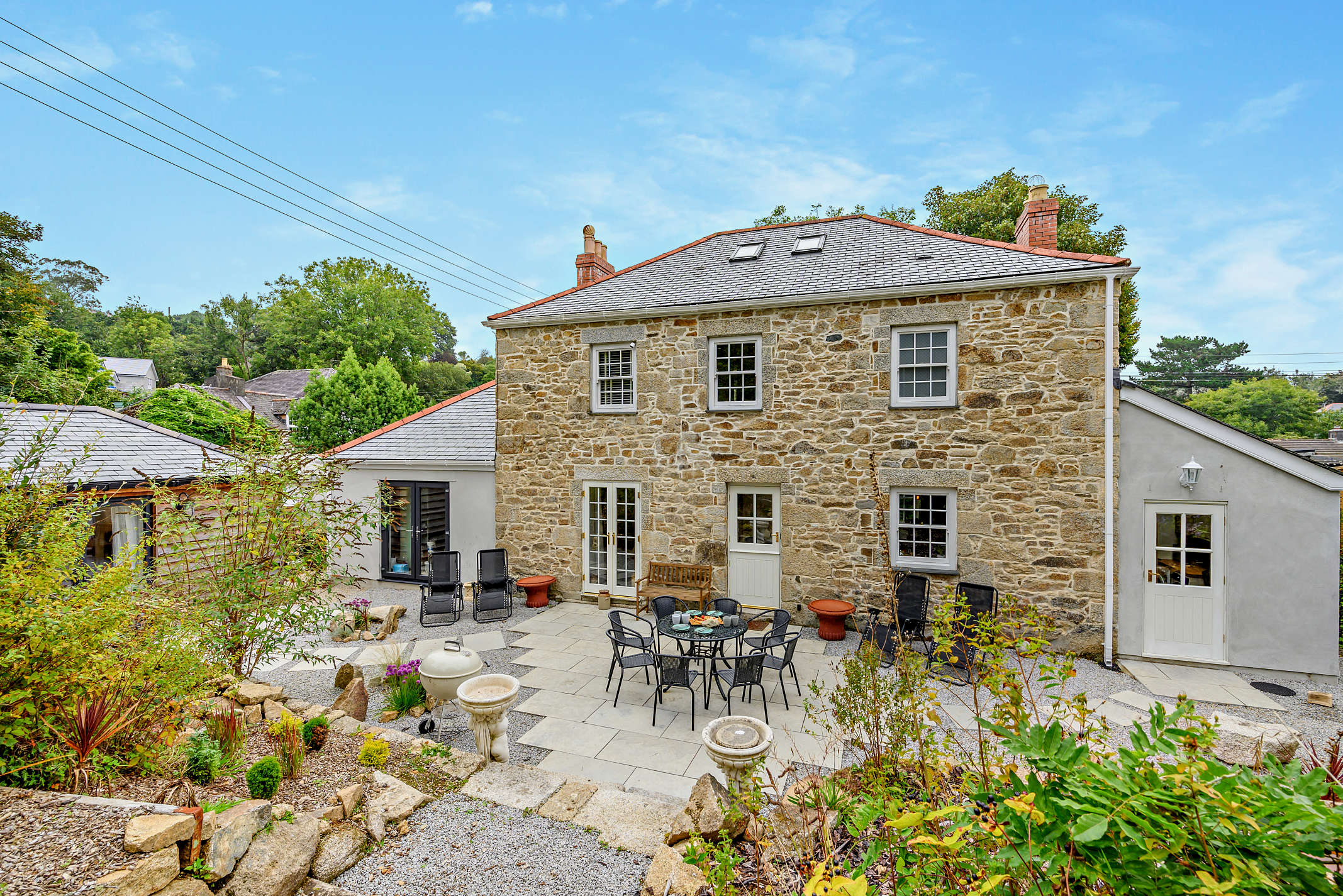
Cornwall sits at the western end of the same South West Coast Path that runs the length of this collection’s coastal regions, and a beach walk here can extend into a cliff walk in either direction without much planning. The cottages we curate across Cornwall sit within reach of both coasts, close enough that choosing north or south doesn’t have to mean choosing one for the whole week.