St Ives works two ways at once, and we mean that as a compliment to both: a harbour town built around a remarkable art collection, and two beaches on opposite sides of the same headland that could belong to different coastlines entirely. Bring a dog and he’ll notice the second part first.
Porthminster or Porthmeor?
Porthminster is the gentler of the two, tucked behind the headland with the town’s old railway line running along the top of it, and it has to be one of the most soothing stretches of sand in Cornwall: calm water, soft light, and a line of palm trees along the promenade that gives the whole scene an almost Mediterranean feel it doesn’t earn on temperature.
Porthmeor is the opposite in every way, facing due north into open Atlantic swell. Its name translates from Cornish as “big beach,” and it lives up to it, with Tate St Ives perched on the rise above and surfers in the water for most of the year. The two beaches sit a fifteen-minute walk apart and feel like they belong to different counties. For how they compare with the rest of the county’s coast, our guide to dog-friendly beaches in Cornwall covers the wider picture.
Both do carry seasonal restrictions on dogs during the busiest months, reviewed by the council each year, so it’s always worth checking the current rules before you go rather than working off last summer’s memory. Outside that window, both are wide open, no lead required on the sand itself.
A harbour that still works
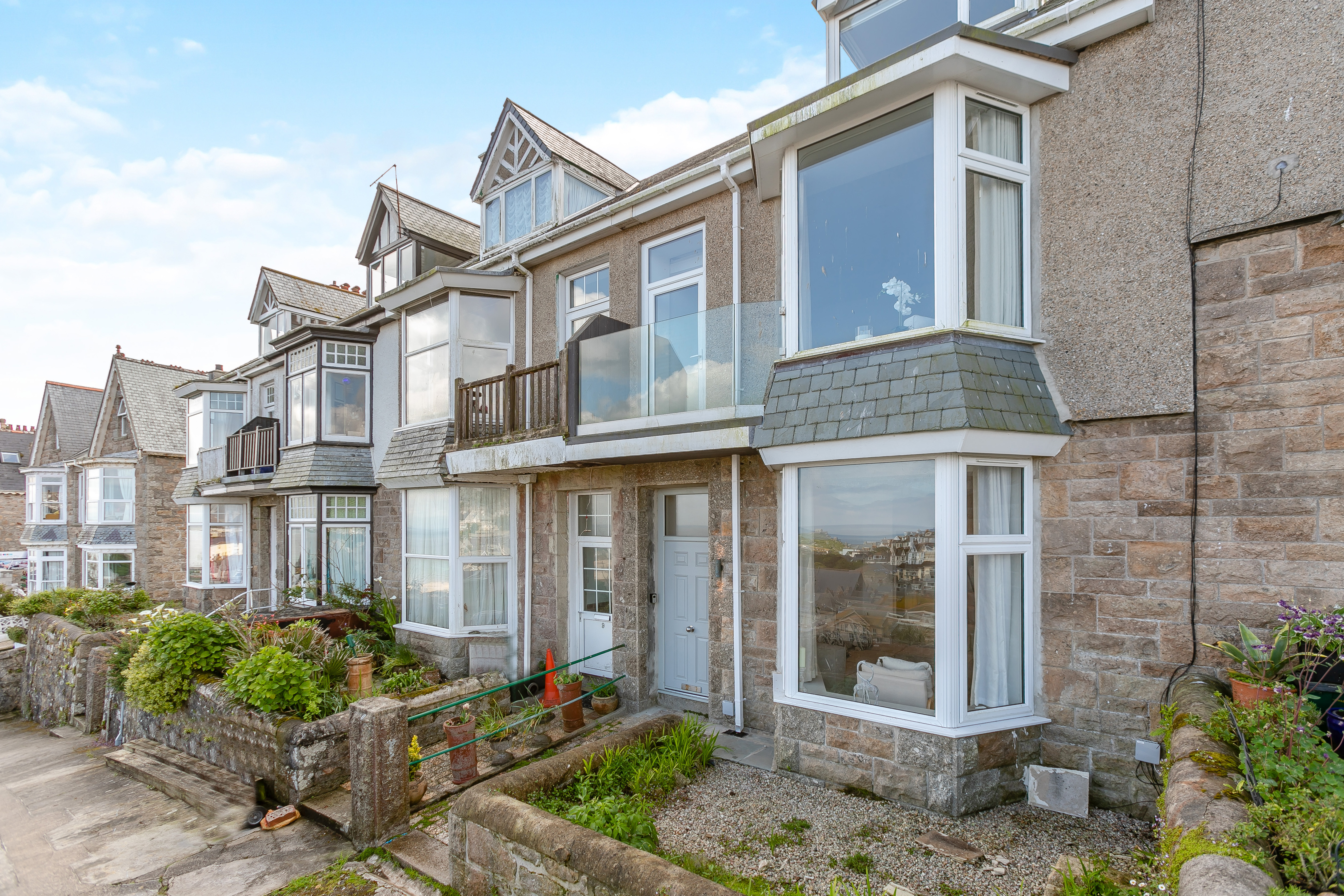
The town in between is one of our favourite parts of the whole visit. The oldest quarter, known locally as Downlong, is a knot of fishermen’s cottages and lanes so narrow that street signs sometimes call them opes rather than roads, Teetotal Street, Virgin Street, Salubrious Place and Fish Street among them, all a short stagger from the harbour. Artists have been drawn here since the 1880s for the quality of the coastal light, and honestly, you can feel why the moment you turn a corner and the whole bay opens up gold.
The harbour itself still works: nets and pots stacked on the quayside rather than staged for a photograph, a huer’s hut still standing on the headland above it where a watchman once scanned the bay for pilchard shoals and called the fleet out with a trumpet made from a hollowed cow horn.
The Sloop Inn has stood on the wharf since the fourteenth century, one of the oldest pubs in the whole of Cornwall, and Tate St Ives sits at the top of the hill alongside the Barbara Hepworth Museum, built around the studio and sculpture garden where she lived and worked for the last twenty-six years of her life. Bernard Leach set up his own pottery here too, in 1920 with the Japanese potter Shoji Hamada, a partnership now credited with founding British studio pottery outright, and in 1968 the town made Leach and Hepworth both Freemen of the Borough on the same day, an odd pairing of honours but a fitting one. Do check the current pet policy before building a stop at any of them into the walk.
Keep the lead on through the lanes regardless of what’s allowed on the beaches, they get busy in summer, and a boat winch or a crowded harbourside table isn’t the place to find out how your dog handles sudden noise.
Out toward Zennor
Head west out of town and the coast path changes character within the first mile, swapping the gallery town for granite cliffs and gorse. Just past Carnelloe, old signage still marks disused mine shafts from Cornwall’s tin and copper years, though the famous engine houses everyone pictures, Levant, Botallack, the cliff-perched Crowns, sit much further on, past Zennor toward St Just, more than most dogs need on a first visit.
Zennor itself is roughly six miles out, and it’s worth every step: Zennor Head gives you views straight down into Pendour Cove, the setting for the old story of a mermaid who lured a local man into the sea and never let him go. If your dog’s had enough by then, don’t retrace the whole cliff path, an inland route through the fields runs roughly parallel and considerably flatter, and it’s what most walkers use for at least part of the way back.
Where to base yourself
Do try to get into St Ives without a car if you can manage it. The branch line from St Erth has run along the bay since 1877, and it drops you right at Porthminster’s edge rather than into the traffic that backs up on the approach roads all summer.
St Ives sits within easy reach of the wider Cornwall collection we curate, close enough for a full day split between the harbour and one of the two beaches without an early start. Base yourself slightly outside the town if parking and crowds sound like too much, the walk in, or the train from further along the line, rarely adds much time, and either way you’ll skip Downlong’s narrowest lanes altogether.
St Ives sits on the north coast, and it’s a fair one to start with if you’re weighing up which side of Cornwall suits your dog better: our guide to choosing north or south Cornwall covers the wider contrast this piece narrows in on. And for how seaside towns like this one became a British institution in the first place, our short history of the British seaside holiday covers the wider story.