Every dog-friendly cottage in this collection is part of a much older story than it looks. The British seaside holiday itself is only a couple of hundred years old, and dogs have been part of it for almost that entire time, if not quite in the way you’d assume.
How the railways built the seaside holiday
Before the 1840s, a trip to the coast meant an expensive day by horse and carriage, well out of reach for most people. Scarborough got there first anyway, drawing visitors to bathe in its mineral springs as early as the 1660s, and it was Scarborough that pioneered the bathing machine too: a horse-drawn wooden hut on wheels, rolled into the shallows so a Victorian lady could get into the water without being seen doing it.
Then the railways changed everything. Britain laid 18,000 miles of track by 1880, and seaside towns that had been fishing villages a generation earlier, Blackpool, Brighton, Llandudno, turned into resorts within a couple of decades. The Holiday Pay Act of 1938 finished the job: for the first time, ordinary working families could take a week away without losing a week’s wages, and the great British seaside holiday arrived in full.
The same decades that built the family dog
The Victorians were building something else at exactly the same time, almost without noticing they were doing it. Dog ownership had mostly belonged to the aristocracy before this, foxhounds, setters, retrievers, dogs with a job to do in the field. Through the second half of the nineteenth century, that changed fast: dog-themed postcards, toys, jewellery and ceramics flooded the market, and owning a dog for no reason other than company became normal across every class rather than a handful of them.
It’s the same railway-driven, newly leisured Britain doing both things at once: building a holiday nearly everyone could reach, and turning the dog into a fixture of nearly everyone’s household. The two habits grew up side by side, even if nobody at the time thought to put them together on a single beach.
Postcards, piers, and somebody else’s rules
The picture postcard took off from 1894, and it fixed the seaside holiday’s iconography for good: piers, deckchairs, donkey rides, a stick of rock, all sent home with the same handwritten line on the back. British seaside holidays peaked in the 1950s and 60s, when a week at the coast was still the default rather than one option among many, and the holiday camp, Butlin’s above all, was the definitive shape of it.
Traditional seaside accommodation came with someone else’s rules attached for most of this history. Billy Butlin’s entire holiday camp empire started because of a rule exactly like that one: as a young man staying at a Barry Island boarding house in the 1920s, he was locked out every day between breakfast and dinner, standard practice at the time, and hated it enough to eventually build something different. A dog was simply one more thing that didn’t fit inside somebody else’s rulebook.
What changed, and what came back
Cheap flights to Spain from the 1970s onward did more damage to the British seaside town than almost anything else in its history, and traditional resorts spent decades in decline as a result. What’s brought people back to the British coast since isn’t nostalgia so much as a shift in what a good holiday needs to include: a kitchen, a garden, nobody else’s rulebook, a dog who doesn’t have to stay behind. Self-catering removed the rulebook entirely, and for a lot of us, the dog came back in with it.
One small, very modern wrinkle sits inside all of this: beach accreditation schemes like Blue Flag, most of them dating only to the 1980s, do restrict dogs from specific stretches of accredited sand during the bathing season, purely on water-quality grounds. It’s worth checking the current rules for wherever you’re headed, and it’s a far smaller footnote in this story than it might feel like standing on the beach reading the sign.
Where this collection fits in
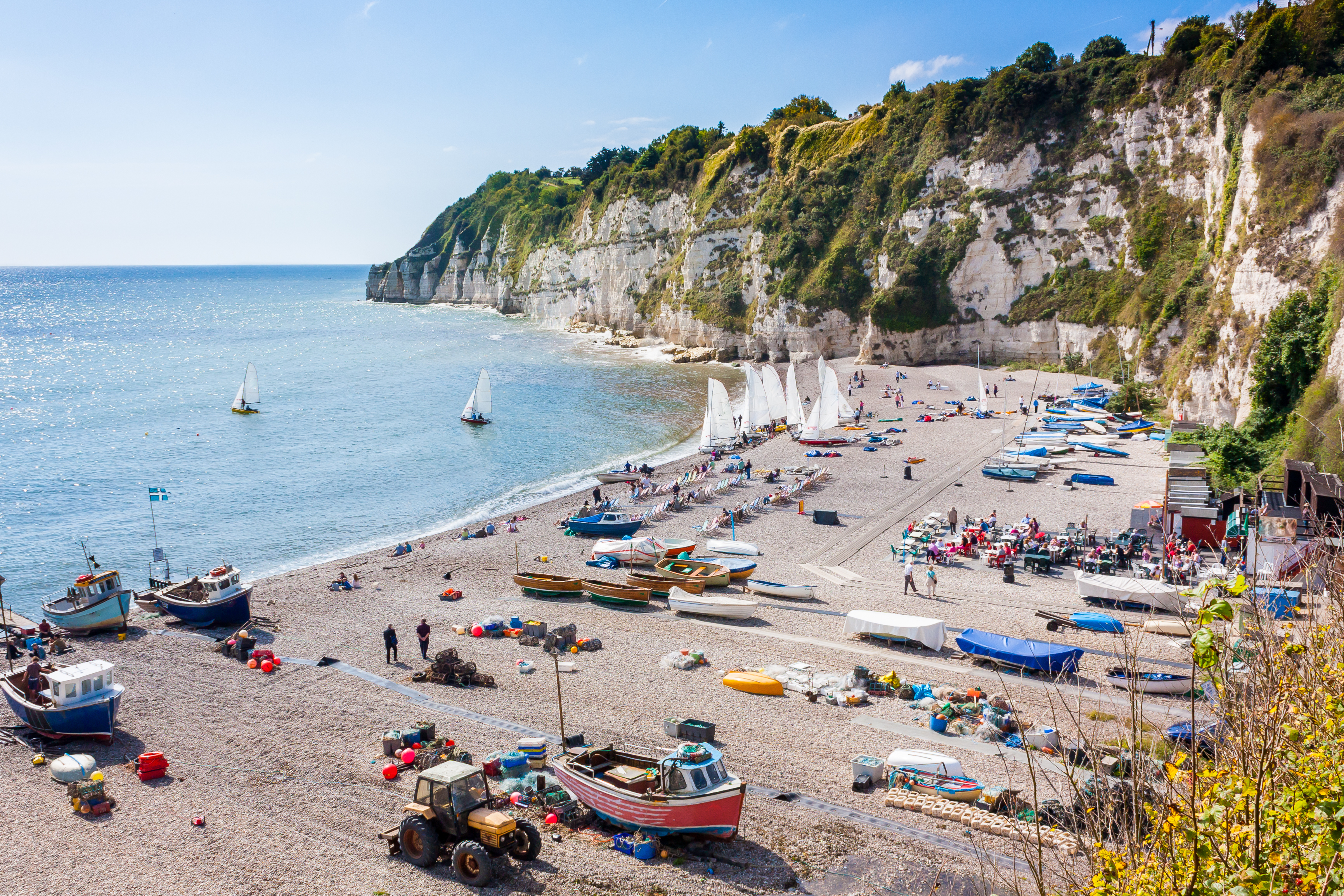
The cottages we curate sit at the newest end of a long story: a coastline that’s been welcoming holidaymakers since Scarborough’s springs, and a dog who’s been part of the household, if not always part of the holiday, for almost as long. We’re just trying to close that last gap. For a sense of the coastline itself, our guides to dog-friendly beaches in Devon, Dorset and St Ives cover the beaches this history actually happened on.