The first pier in England wasn’t built for a view. Ryde, on the Isle of Wight, put one up in 1812 purely so passengers could reach the steamers moored offshore without wading through the shallows first. Everything a pier became after that, the promenading, the amusements, the fish and chips, came later and almost by accident.
Why a pier at all
Southend’s pier shows what tide does to a seafront better than almost anywhere else. The original structure ran six hundred feet out from the beach, and the sea at Southend recedes for over a mile at low tide, so the pier kept being extended until it reached seven thousand feet, still the longest pleasure pier in the world today.
The Victorian building boom
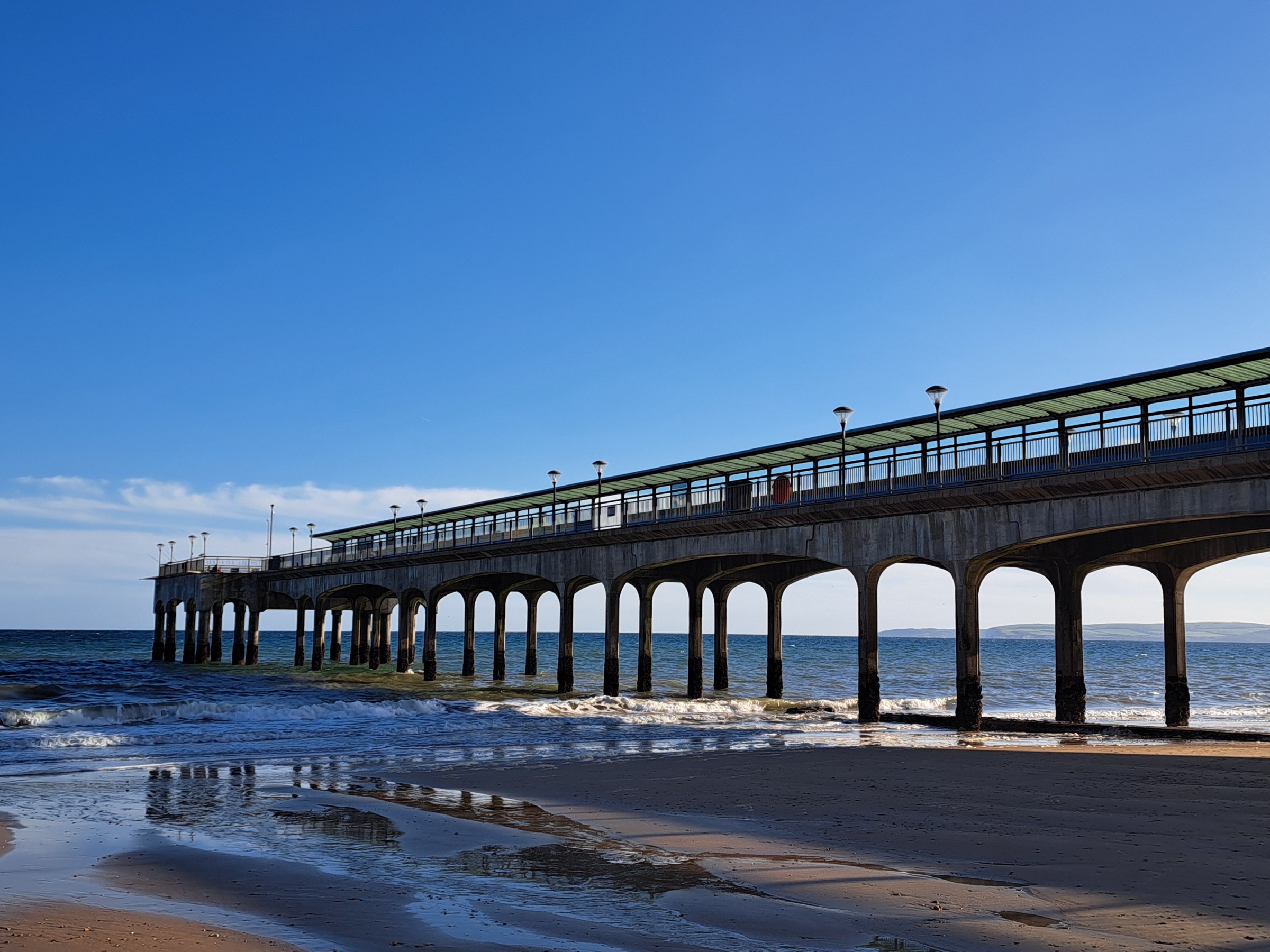
One engineer, Eugenius Birch, ended up responsible for a striking number of the piers built during the Victorian boom, including three that still stand today: Brighton’s West Pier, and, closer to this collection, both Bournemouth Pier and Swanage Pier on the Dorset coast. More than a hundred piers went up around the country within a few decades of each other once cheap iron construction and the railway had put a seaside day trip within reach of almost anyone, and Birch alone had a hand in around a dozen of them.
Bournemouth and Swanage
Bournemouth’s pier has been rebuilt so many times that the current structure is its seventh version on the same spot. A hundred-foot wooden jetty opened in 1856, was replaced by a longer one in 1861, and that one was pronounced unsafe for steamers in 1876 after a storm and an infestation of shipworm finished it off. Birch’s iron pier went up in 1880 and is, in its extended and repeatedly repaired form, still the one standing there now.
Swanage had two piers rather than one. The first, built in 1859 for the local stone-quarrying trade, carried a tramway down its length to load stone onto waiting ships; you can still see the old rails set into the seafront walkway today. The second, the passenger pier still in use, opened in 1895 once steamer trips between Swanage, Poole and Bournemouth had become popular enough to need a dedicated landing stage of their own.
What sank most of them
Both Dorset piers were breached deliberately during the Second World War, on government order, to stop them being used as ready-made landing stages if Germany invaded. Bournemouth’s was repaired and reopened by 1946. Swanage’s stayed breached for longer, not fully repaired until 1948, and by the 1960s regular steamer services had stopped altogether and the pier began to fall into serious disrepair. It took the Swanage Pier Trust, formed in 1994, and well over a million pounds in lottery funding, grants and public donations to bring it back from the state it had reached by then.
Fire finished off several piers elsewhere that storms and war didn’t. Brighton’s West Pier, also a Birch design, closed in 1975 and was gutted by fire in 2003; it still stands offshore as a skeleton, visible from the beach but reachable by nobody. Hastings Pier suffered the same fate in 2010, though with a different ending: the rebuild reopened in 2016 and went on to win the RIBA Stirling Prize for architecture in 2017, the same prize won four years earlier by the restored Astley Castle, a story covered elsewhere in this collection. Bournemouth and Swanage both escaped the fire that took Brighton and nearly took Hastings, which is as much luck as good maintenance.
The ones still standing today
Around fifty-five piers are still standing in some usable form today, roughly half of what was built at the peak. Bournemouth and Swanage are both among the survivors, both still doing more or less what they were built to do a century and a half ago, minus the shipworm.
None of this changes the actual walk. Both piers sit right along beaches already covered in this collection’s Dorset guides, and it’s worth checking current dog access on the pier itself directly, since the rules there can differ from the beach rules covered elsewhere. Walking a dog past either one, it’s worth knowing that standing there at all was never guaranteed.