Dorset's best dog walks are mostly on the coast path and the chalk uplands — both excellent, both largely free of the heavy summer footfall that makes some regions frustrating. The main livestock consideration is sheep on the Purbeck ridge and around the chalk downs. The coast path sections here involve some serious ascent; the ridge walks are more open and forgiving. Either way, Dorset rewards the dog walker who gets up early.
There's a version of Dorset that most visitors experience: Lyme Regis seafront, Corfe Castle car park, a Studland Bay beach visit. It's a fine version. But the walking — which is what Dorset does exceptionally well — tends to be found a step or two off that circuit. The county has more footpaths per square mile than almost anywhere in England, and the landscape they cross shifts constantly: orange sandstone cliffs, chalk downland, ancient heathland, river flood plains.
Why Dorset walking is underrated
The dominant walking narrative in England tends to pull people north: the Lake District, the Yorkshire Dales, Dartmoor. Dorset gets a footnote. This is a significant misallocation. The coastal walking here is extraordinary — the South West Coast Path section through Dorset includes some of its most dramatic terrain — and the inland walking is considerably more varied than the "rolling countryside" cliché suggests.
For a dog owner, the great advantage of Dorset is that it's rarely overwhelmed. The walking you find here feels, in season, the way the Lake District feels in February.
Tourist density is lower than Cornwall, the Lake District or the Peak District. In September or October, the coast path through west Dorset can feel almost private. Dogs off-lead on open cliff paths, with wide views and nobody ahead of them: that's the Dorset experience at its best.
Golden Cap and the west Dorset coast path
Golden Cap is the highest point on the entire South West Coast Path — 191 metres of golden sandstone, with views on clear days from Dartmoor to Portland Bill. The walk up from Seatown (the best approach: park in the village, follow the coast path east) takes around 45 minutes at a steady pace. The top is National Trust land, open to dogs, and the 360-degree views make it immediately obvious why this is considered one of the finest coastal viewpoints in England.
The walk from West Bay east through Eype and up to Golden Cap, then returning via Chideock or Seatown, gives a full day with significant ascent and exceptional scenery throughout. Dogs should be kept on leads near the cliff edge and through the farm sections at Chideock; the open summit and clifftop sections are fine for off-lead. The descent from Golden Cap's eastern side towards Charmouth is steep and slippery after rain — wide paths but real gradient.
Lyme Regis to Charmouth: the undercliff route
The Lyme Regis to Charmouth walk via the Spittles — the unstable undercliff section of eroding coast — is one of those Dorset walks that rewards local knowledge. The main coast path goes inland briefly to avoid the most unstable sections; the undercliff scramble route is for experienced walkers who know what they're doing. The standard path, however, offers excellent views and passes above some of the most geologically active coastline in Britain.
The round trip Lyme Regis to Charmouth and back (or one-way with a shuttle car) covers about six miles with moderate ascent. Dogs are welcome throughout. Charmouth beach makes a good midpoint stop — see our notes on dog-friendly beaches in Dorset for what to expect at each beach.
The Purbeck ridge
The ridge walk from Corfe Castle to Swanage — or extended further east to Durlston Head — follows the chalk spine of the Isle of Purbeck with views north across Poole Harbour and south towards the sea. It's one of the most satisfying long ridge walks in southern England: the terrain is mostly open chalk grassland, the paths are clear, and the views justify every step.
This walk involves sheep grazing on and around the ridge for most of the year. Dogs should be kept on leads through grazed sections — which are well-marked — and can be off-lead on the open path sections between. The ridge itself is best walked west to east (Corfe to Swanage) to keep the best views ahead of you. Durlston Country Park at the eastern end is excellent — well-managed, dog-friendly, and with a café where dogs are welcome outside.
Corfe Castle and the heathland
The heathland around Corfe — part of the larger Purbeck Heath, a fragment of the ancient heath that once covered southern England — is exceptional for dogs. The National Trust heathland paths are largely free of livestock, mostly open terrain, and remarkable for wildlife. Corfe Common itself (immediately south of the village) is one of the best short dog walks in east Dorset: unfenced, varied terrain, with the castle ruin as a backdrop that remains genuinely dramatic however many times you've seen it.
Blue Pool, a couple of miles northwest of Corfe, is a quieter alternative — a former clay pit now surrounded by heathland and Scots pines. The walks around it are easy, mostly flat, and dogs are welcome in the surrounding grounds.
Inland Dorset: chalk downs and river valleys
Inland Dorset is less visited and, for a dog owner wanting footpath walks without coastal crowds, often more rewarding. The chalk downland around Maiden Castle (the vast Iron Age hillfort south of Dorchester) offers wide-open walking on public footpaths; the site itself is managed by English Heritage, and dogs are welcome on the earthworks. The views across the Frome Valley from the ramparts are striking.
The Frome Valley itself, walking east from Dorchester, offers flat river-level paths through water meadows — excellent for a dog who prefers flatter ground, and less-walked than the coast. Further west, the Marshwood Vale — the green bowl of farmland between Bridport and the county border — has a network of footpaths through ancient hedged lanes and small farms that feel properly remote in a way that's harder to find on the coast.
Cottages from our collection
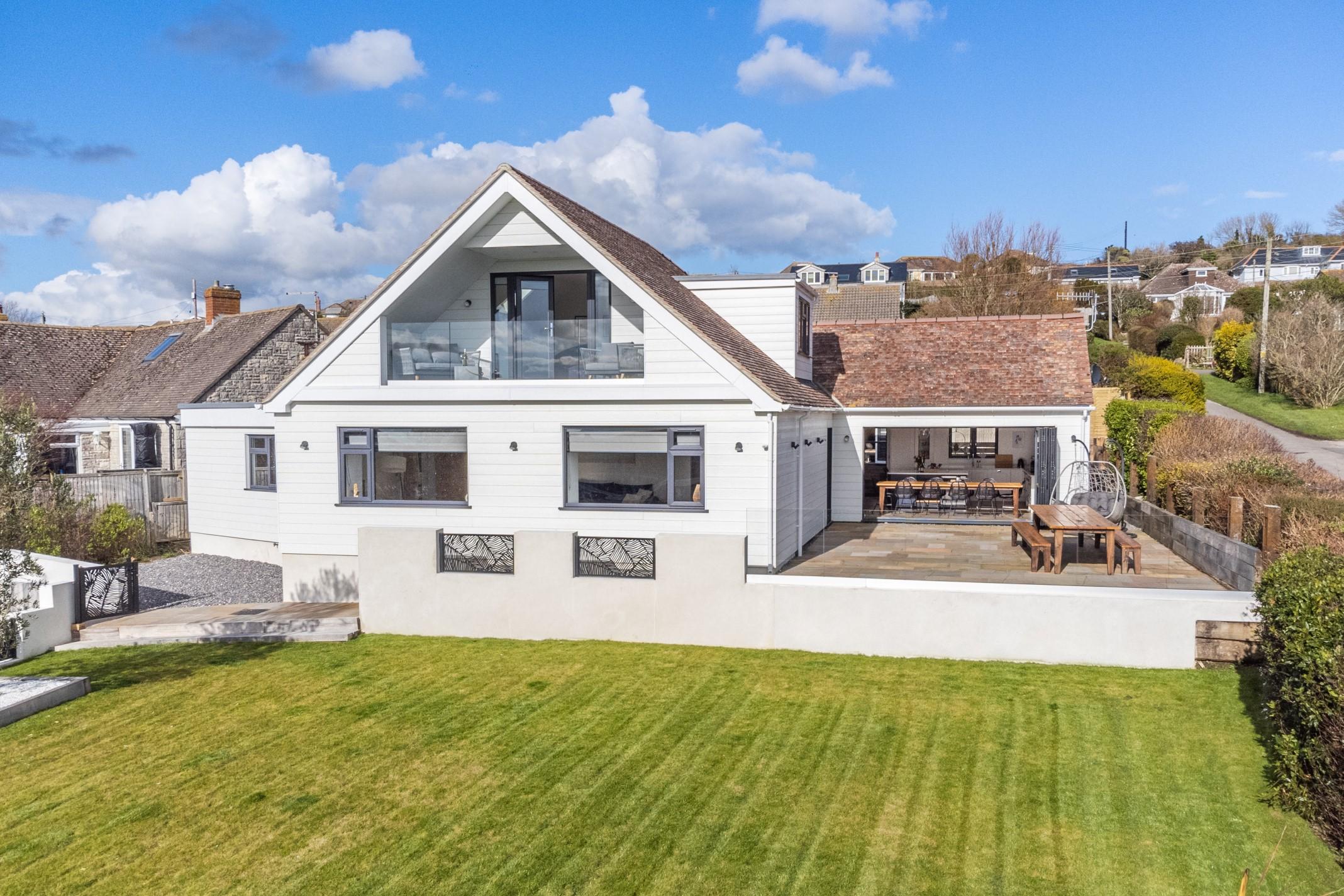
The Bridport House
Clifftop position directly above West Bay, with immediate access to the coast path in both directions. The Golden Cap walk starts from the village below.
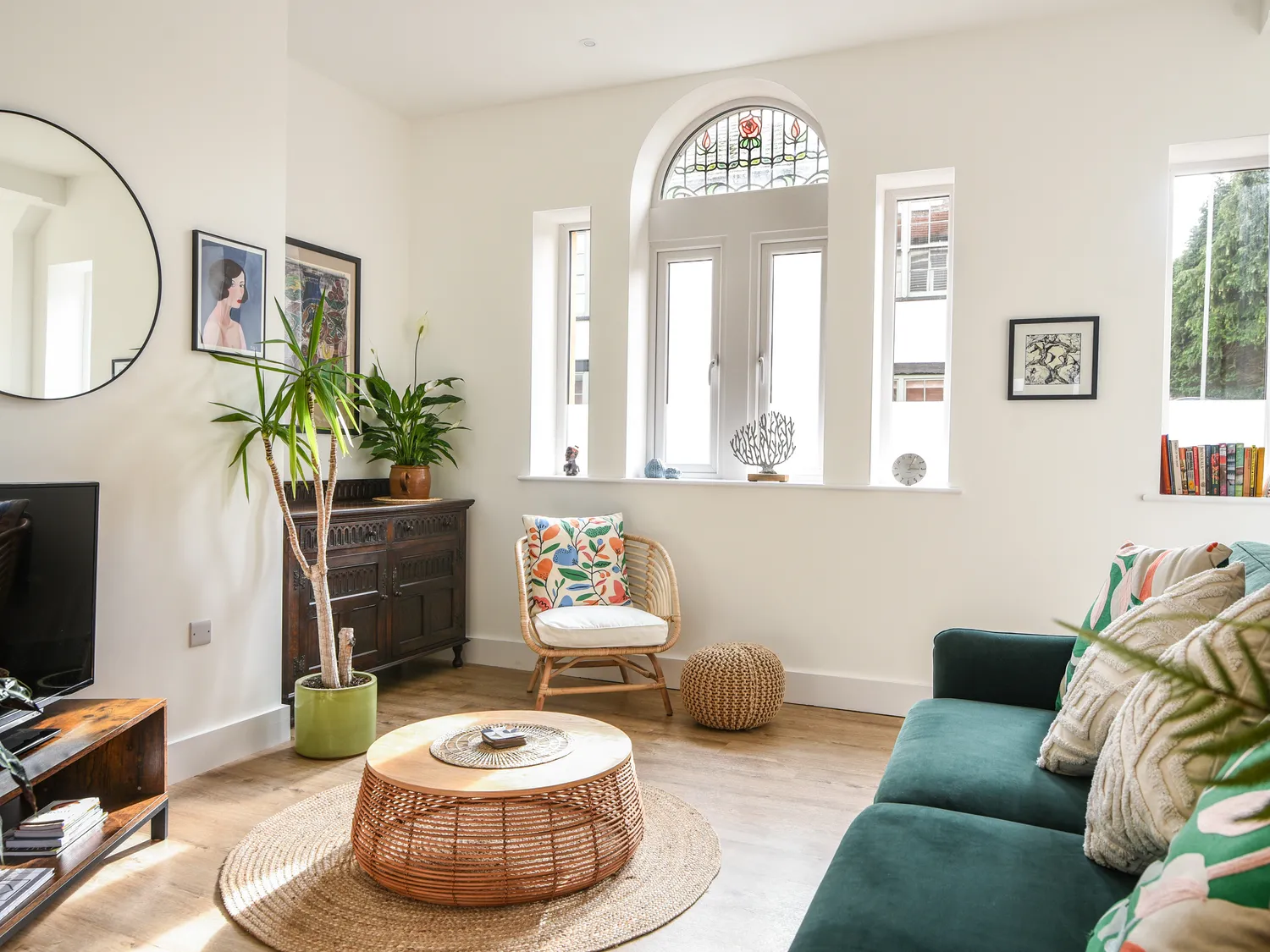
The Lyme Regis Apartment
In Lyme Regis, well-placed for both the Charmouth coast path to the east and the Golden Cap approaches to the west.
Livestock, leads and a note on the cliff paths
Dorset walking involves more livestock than most people expect. Sheep graze the Purbeck ridge, the chalk downs, and large sections of the cliff-top farmland. Cattle appear on some of the valley walks and heath edges. On the coast path, farmland sections are well-signposted and leads are expected; the open headland sections and cliffs are almost always fine for off-lead.
Five things worth knowing
-
The coast path involves real ascent This is not a gentle amble. Golden Cap, the Purbeck ridge and the sections around Durlston all require a reasonable level of fitness — yours and your dog's.
-
Slippery after rain The sandstone and clay sections of the coast path become genuinely slippery after wet weather. Particularly the descents towards Seatown and Charmouth.
-
Tide awareness on beach sections Some coast path sections involve beach walking at low tide only. Check tide times before setting out on the undercliff routes.
-
Limited car parks on the Purbecks Parking is constrained in the Purbecks in summer. The Corfe Castle National Trust car park fills by mid-morning on fine weekends. Arrive early or use the steam railway from Swanage.
-
Water on longer routes There are very few natural water sources on the chalk ridge and the open cliff paths. Carry water for your dog on any walk longer than two hours.
For a complete picture of Dorset with a dog — beaches, day trips, places to eat — our regional guide covers the wider county. For the coast path itself across Cornwall, Devon and Dorset together, see our South West Coast Path guide.