If you want a walk that feels like a different county altogether, this is the one. The Lizard peninsula sits right at the southern tip of Cornwall, and everything about it feels a little wilder and a lot quieter than the busier north coast: big skies, dramatic cliffs, and some of the emptiest stretches of coast path you’ll find anywhere in the county, even in August.
Kynance Cove: start here
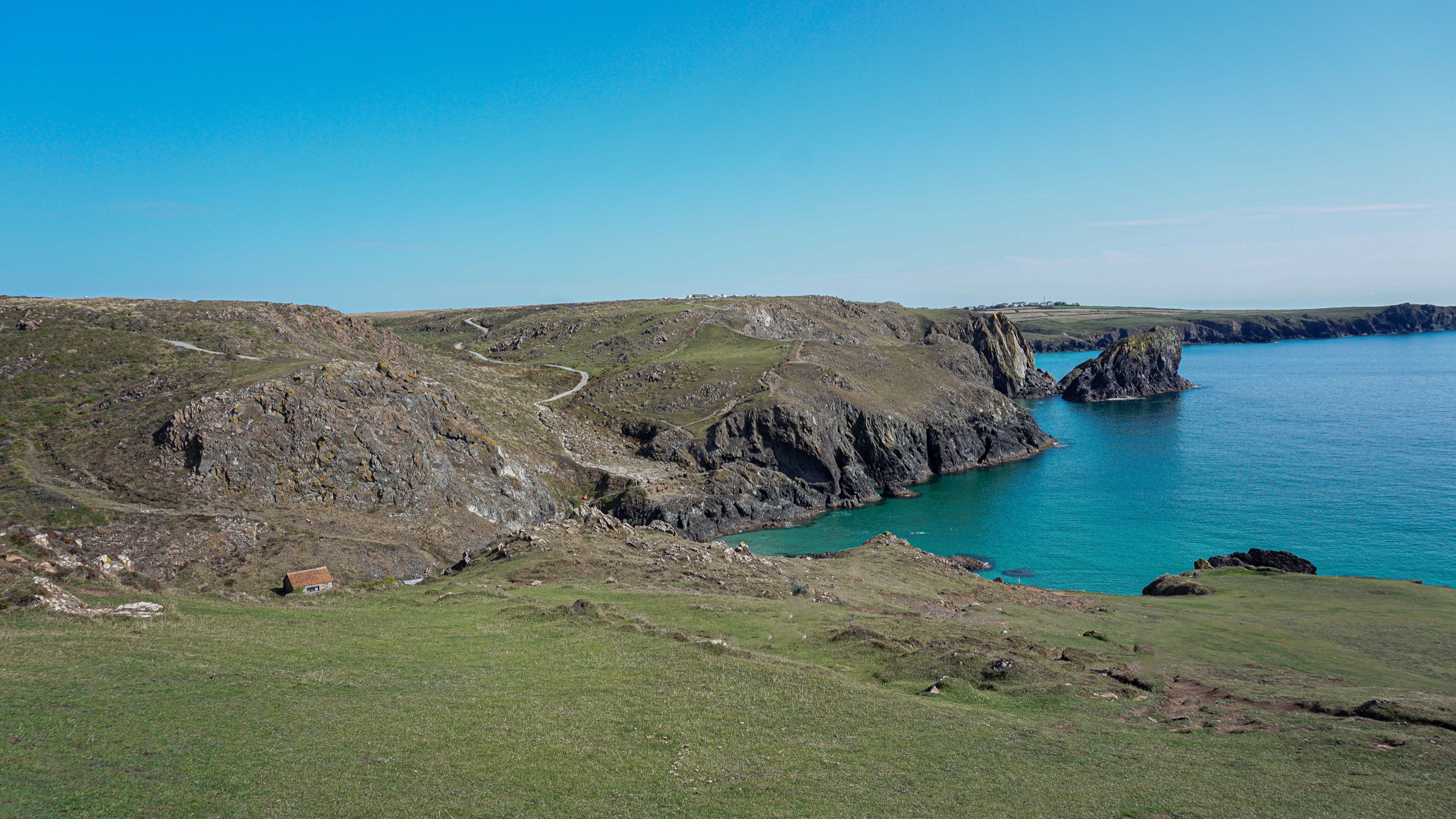
Start with Kynance Cove, because you should. It’s about two miles along the coast path from Lizard Point, and it’s worth walking in rather than driving straight to the car park above it, the approach is half the fun. There’s a little tunnel through the rock on the beach that dogs love poking their nose into, and at low tide a sandy spit opens up connecting the headland to a cluster of sea stacks just offshore. It’s more sand-and-scramble than flat-and-easy underfoot, so it suits a dog who’s happy picking a path over stones rather than one who wants to run flat out, and the steps down to the cove itself are steep enough that we’d think twice with an older dog.
On to Lizard Point
Keep going and you’ll reach Lizard Point itself, the most southerly spot on the whole of mainland Britain, marked by a lighthouse and not a great deal else. Even in peak season it never feels crowded here, one of our favourite things about the whole peninsula: it’s just that little bit further than everyone’s willing to drive.
Not far along the coast at Poldhu, Marconi sent the first transatlantic radio signal from these cliffs in December 1901, the station built here because there was nothing but open Atlantic between this stretch of coast and Newfoundland, 2,100 miles away.
Why the cliffs look the way they do
The cliffs themselves are worth a second look too. This stretch of coast is made of a strange dark green and red rock called serpentinite, mantle rock shoved up onto the surface by plate movement roughly 380 million years ago, and it’s the largest exposure of its kind anywhere in Britain. You don’t need to know any of that to enjoy the walk, but it’s a nice thing to mention if anyone asks why the rocks here look so different.
A couple of practical bits
A word of warning for wet days: that same rock gets noticeably slippery when it rains, so slow down a bit if the weather’s turned since you set off. And you’ll pass sheep and cattle grazing some of the clifftop fields inland of the path, so the lead’s worth clipping back on wherever farmland meets the coast.
Where to base yourself
If you’re planning a trip to Cornwall and want a day that feels like a change of pace from the beach towns, the Lizard is one of our favourite parts of the county for it. The cottages we curate across Cornwall reach down toward this corner of the peninsula too, close enough to fold the Lizard into an ordinary day out rather than treat it as a special trip.