Coniston Water carries two very different kinds of history for a lake five miles long, one written in speed records and one in watercolours, and both men responsible for them are buried in the same small churchyard above the shore.
The shoreline walk
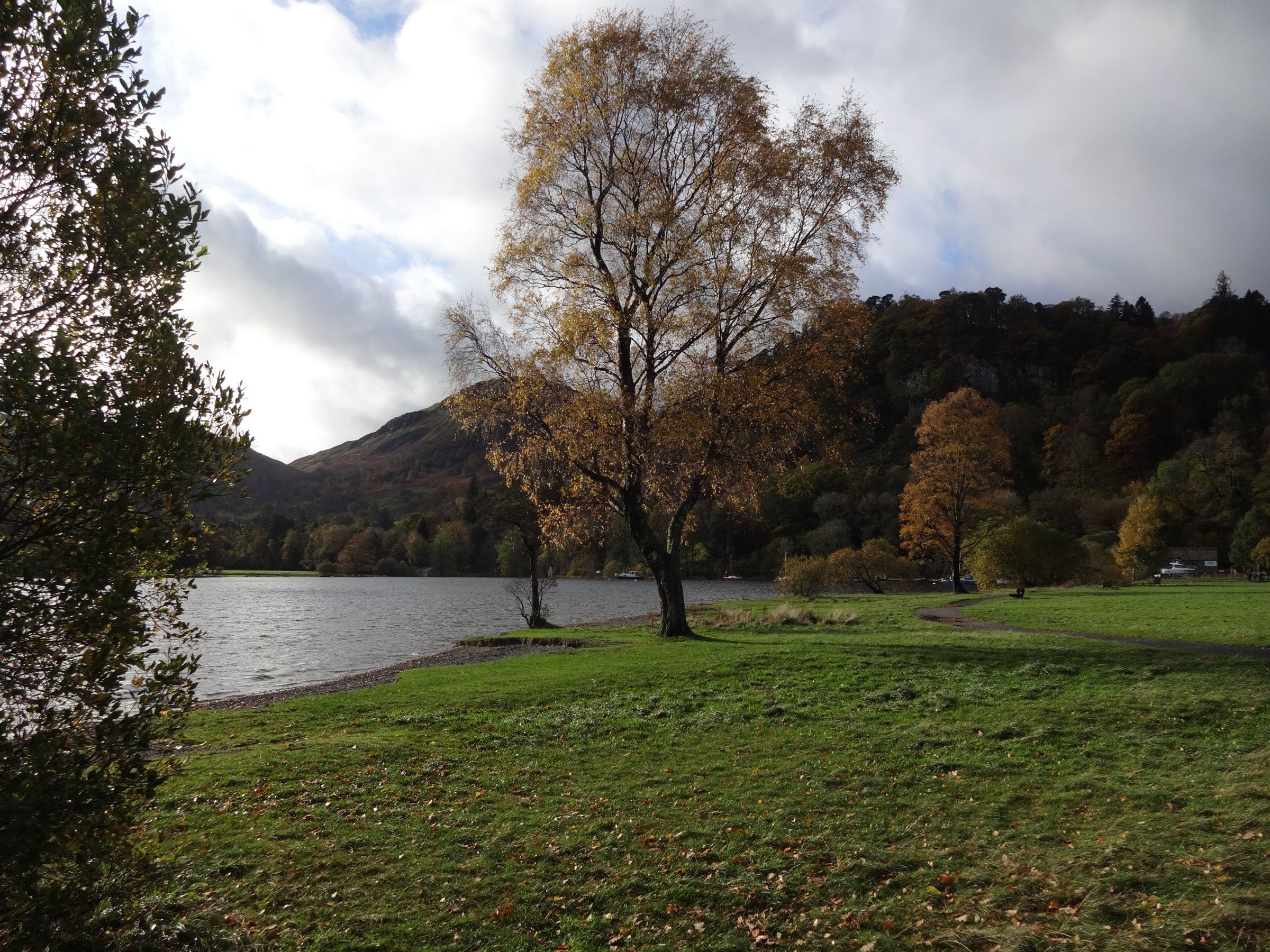
The lakeside path runs close to the water for most of its length, flat enough for an easy morning and long enough to fill a full one if a dog’s up for the whole shoreline rather than a shorter loop back into the village. It’s one of our favourite easy lake walks in the district precisely because it asks so little of the terrain while still delivering the water, the fells, and the woodland in more or less equal measure. The National Trust’s steam yacht Gondola, built in 1859 and restored after decades out of service, still runs the length of the lake and takes dogs on board, worth checking current times and current policy before planning a walk around it rather than assuming last year’s timetable still holds.
The Campbell family and Coniston Water
Malcolm Campbell set a water speed record here in August 1939, reaching 141.74 miles an hour, and his son Donald Campbell came back to the same lake repeatedly over the following decades, breaking the record here four separate times, including 260.35 miles an hour on 14 May 1959. On the morning of 4 January 1967, Bluebird flipped during the attempt and Donald Campbell lost his life on the water he knew so well. He and the wreckage weren’t recovered from the lake until 2001. Bluebird has since been restored and now sits at the Ruskin Museum in Coniston village, close to where Campbell is buried.
Coniston village and the Ruskin connection
The museum takes its name from John Ruskin, the Victorian writer and art critic who lived at Brantwood, his house on the lake’s eastern shore, for the last three decades of his life. Brantwood is open to visitors today, its gardens running down toward the water on the quieter side of the lake from the village. Ruskin’s buried in the same churchyard as Campbell, a critic and a speed record breaker separated by most of a century but sharing the same small patch of ground above the water they both, in very different ways, spent their time studying.
The Old Man, for a fitter dog
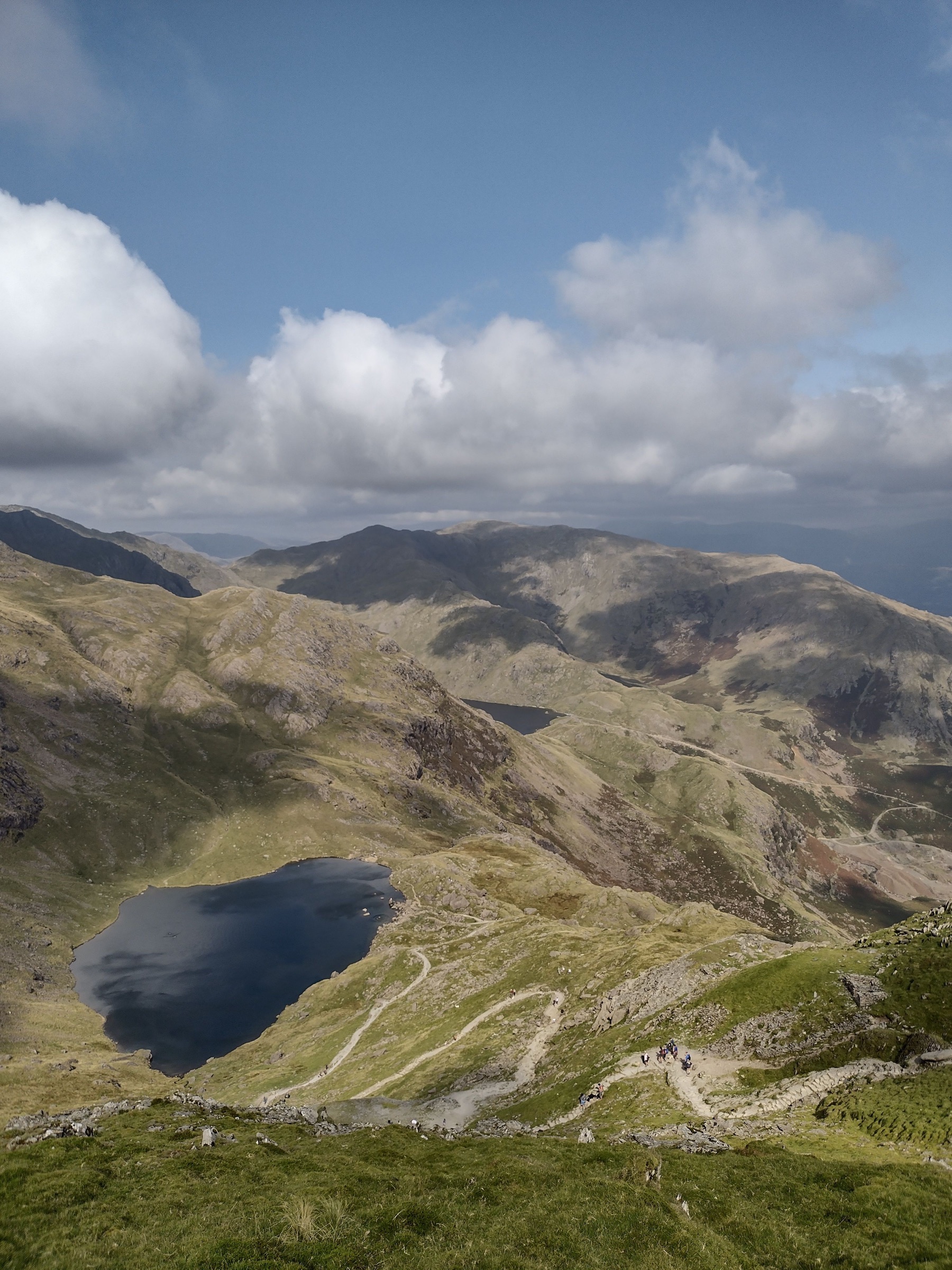
For a fitter dog, the Old Man of Coniston rises directly above the village to just over 800 metres, its lower slopes scarred with the remains of Coppermines Valley, the copper and slate workings that funded much of the village below before tourism did. The old quarry tracks make for walking rather than scrambling most of the way up, though the final approach gets steep and exposed enough that it’s worth being honest about whether today is the day for it. Sheep graze the open fellside on the lower slopes, so the lead goes on well before the quarry workings start.
Where to base yourself
Coniston sits within reach of the wider Lake District collection we curate, close enough to combine the shoreline walk with the village and the museum in a single unhurried day, saving the Old Man itself for whichever morning your dog wants a climb rather than a walk.