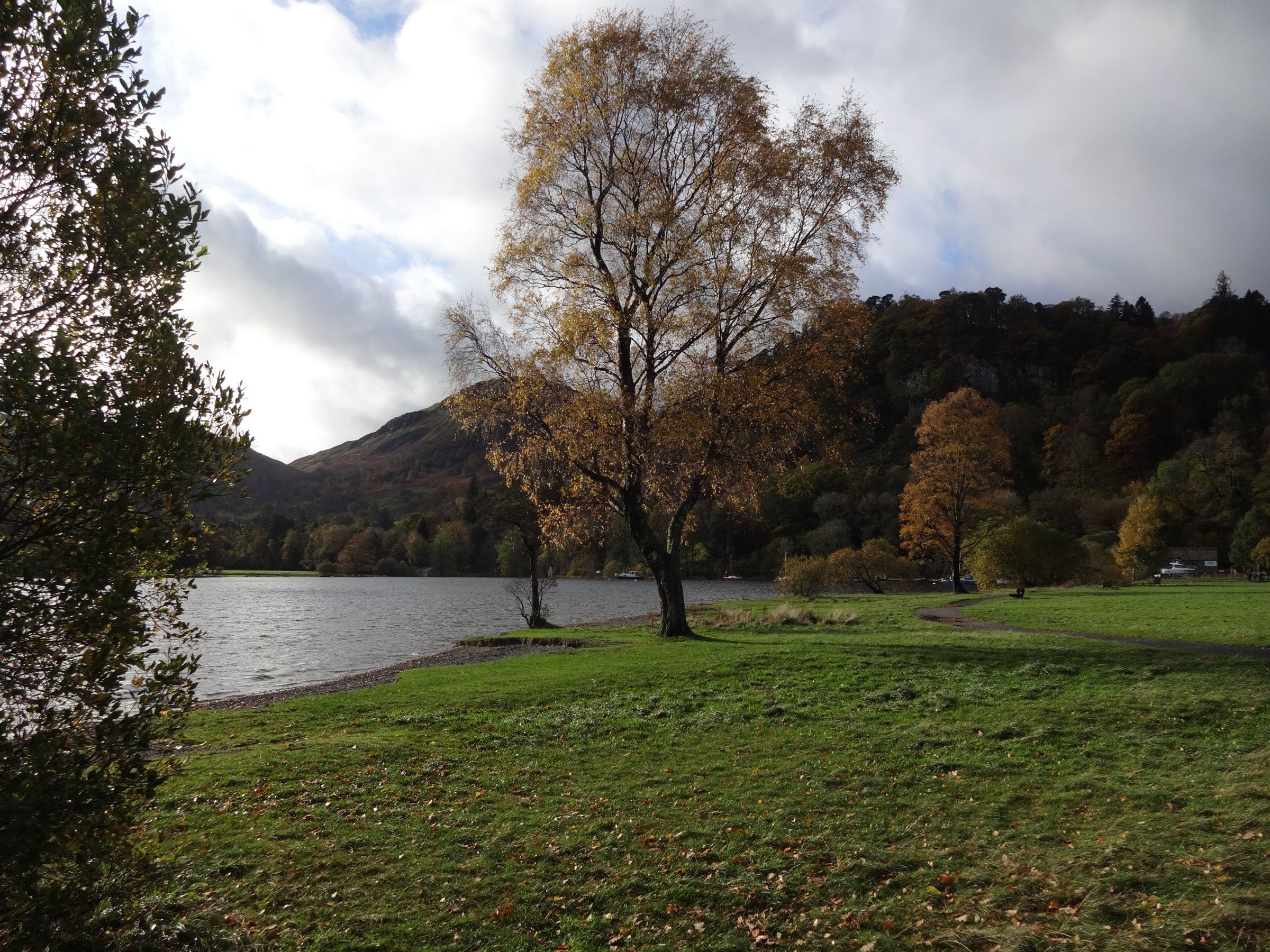
Ullswater bends twice along its nine-mile length, a shape geographers call dog-legged, and it’s the second-largest lake in the district. Helvellyn and the high fells get most of the attention above it. Underneath them, the shoreline path is a different day altogether: level, well-trodden, and gentle enough that it barely resembles the mountain the guidebooks are actually describing.
Along the shore to Aira Force
Start from Glenridding and the path holds close to the water for the first three miles or so. Sheep graze the lower slopes around Glencoyne and Sandwick, so the lead goes on wherever the fields open out rather than staying on for the whole walk. The woodland thickens as the path nears Aira Force, and the waterfall announces itself in sound a good way before it’s visible at all.
The waterfall that names itself
Aira Force is the best-known waterfall in the district, and its name explains itself once you know the words behind it: Aira from Old Norse for “river at the gravel bank,” Force from the Old Norse for waterfall, so the name simply describes what it is, twice over, in a language nobody here has spoken for a thousand years. Aira Beck falls around twenty metres into a rocky pool at this point, having already travelled some eight kilometres down from Stybarrow Dodd to get here.
Two stone bridges span the ravine either side of the drop, both built early in the twentieth century in memory of two brothers from the Spring family: Cecil, who became British ambassador to the United States during the First World War, and Stephen, a senior civil servant. Lyulph’s Tower, a castellated hunting lodge built for the Howard family in the 1780s, sits half-hidden in the trees just above.
Glencoyne Bay
Keep going past the falls and the path drops back down to Glencoyne Bay, where William and Dorothy Wordsworth walked on the fifteenth of April 1802, on their way back to Grasmere after a night in Pooley Bridge. Dorothy wrote the daffodils up in her journal that same evening. William turned the walk into “I wandered lonely as a cloud” not long after, and the same daffodils she described still come back along this shore every spring.
Back by boat
Glenridding, Pooley Bridge, Howtown and Aira Force all have their own pier, and the Ullswater Steamers have been calling at them since 1877. One of the original vessels, the Lady of the Lake, still works the lake today, converted from steam to diesel in 1936 and now part of the National Historic Fleet. They weren’t built for tourists in the first place: through the second half of the nineteenth century these boats carried mail, workers and goods to and from the Greenside lead mine at Glenridding, which didn’t close until 1962.
A walk out and a boat back turns the whole route into one direction of effort instead of two, which suits a dog who’s had enough by early afternoon. Check current dog policy on board before relying on it.
Before you swim
Ullswater is deep and cold even in August, and while dogs do swim in it, cold water and boat traffic deserve the same caution here as on any of the larger lakes. It’s seen faster boats than the steamers too, if only once: Donald Campbell set the world water speed record here in 1955, reaching 202 miles an hour in the jet-powered Bluebird K7, before returning to break his own record four more times on Coniston Water.
Where to base yourself
Ullswater sits within the wider Lake District collection we curate. The walk described here, shore to falls to Glencoyne and back again by boat, makes a full day on its own, and it’s the gentler day this part of the district has to offer, not a smaller version of what Helvellyn asks for above it.