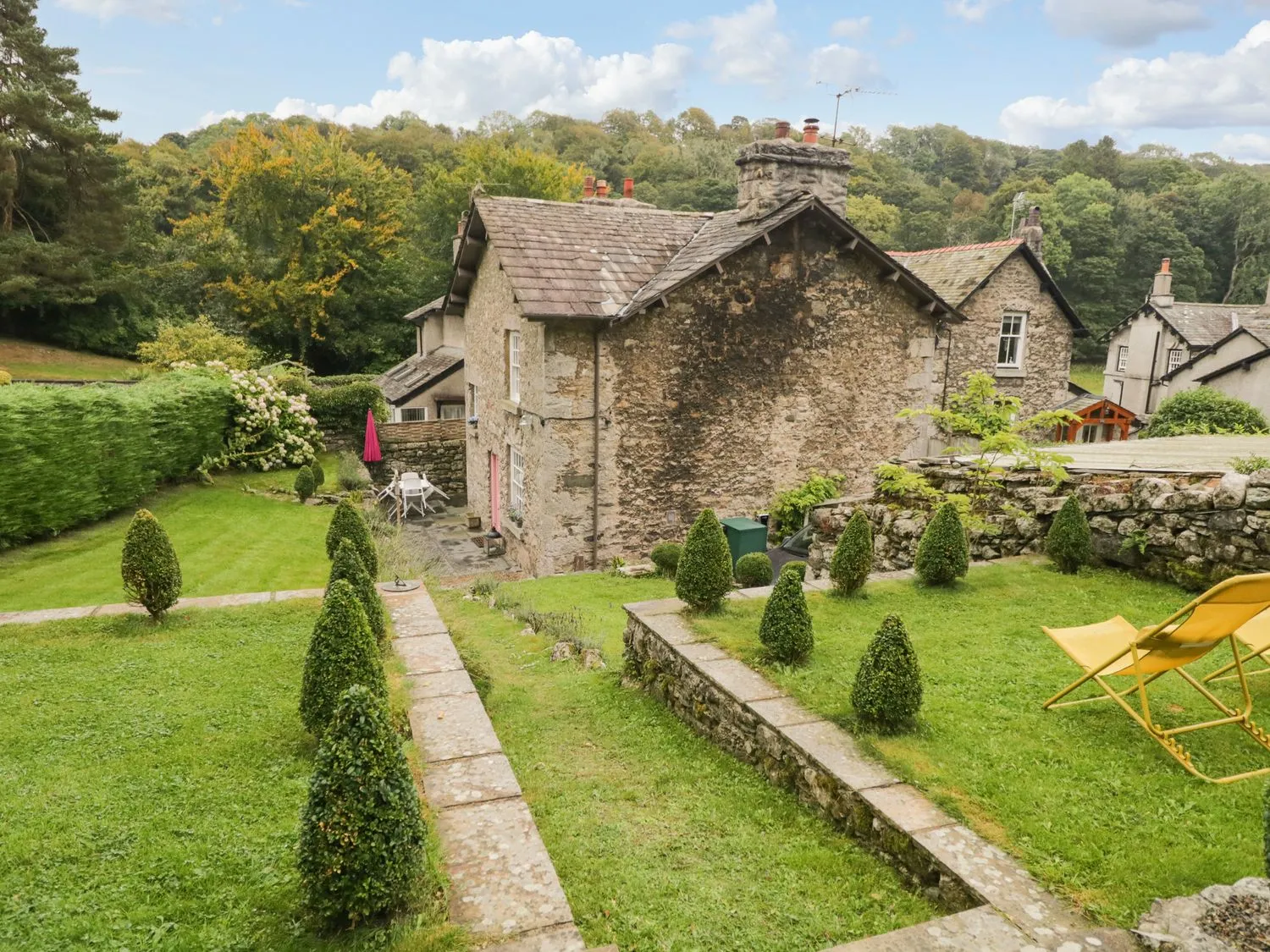
The Lake District's valley walks are some of the finest low-level walking in England — and they're far better suited to dogs than the fells, where sheep grazing makes off-lead difficult and the terrain is demanding. Borrowdale, the Langdale valley, the Derwentwater shore path and Buttermere all offer outstanding walking at or close to lake level, with a fraction of the summer footfall of the popular fell tops. The livestock situation in the valleys is significant — leads are required through all grazed land — but the wooded sections and lake shores are largely livestock-free.
Most of the guidance written about the Lake District for dog owners focuses on which fells are feasible. The sheep grazing above 300 metres (which covers most of the high fell terrain) makes off-lead walking genuinely difficult in many places, and the summit footpaths in August can be uncomfortably crowded. The valley alternative is consistently underplayed. It shouldn't be.
The lakes themselves, the ancient sessile oak woodlands, the rivers cutting through glacial valleys, the footpaths along the water's edge — this is walking that matches the fell tops for beauty in every important respect, without the complications. And the dogs, in our experience, tend to agree.
Why valley walks suit a dog better than the fells
The standard Lake District itinerary involves driving to a fell car park and ascending something significant. This is excellent walking and we don't dismiss it — our guide to the fells that suit a dog covers this ground in detail. But the fell walks come with constraints for dog owners: sheep grazing across almost all of the high fell landscape, lead requirements that make long ascents considerably less enjoyable, and terrain (loose scree, narrow ridges, steep descents) that suits a sure-footed dog but excludes others.
The valley walks sidestep most of this. Lake shore paths are typically through managed access land or National Trust-owned ground where lead rules vary by section. The oak woodlands of Borrowdale, Grizedale and the Langdale valley are ancient semi-natural habitats where sheep grazing is less prevalent and dogs can often run free. And the rivers — the Derwent, the Brathay, the Esk — are magnificent for a dog who swims.
The Derwentwater shore path at dawn, when the first light catches the water and the fells across the lake: this is one of those walking moments that stays with you.
Derwentwater
The circuit of Derwentwater — roughly ten miles around the lake shore — is one of the finest full-day walks in the Lake District. The National Trust manages much of the lake shore, and the path runs close to the water for the majority of its length. The western shore (Catbells side) involves some ascent; the eastern shore path is flatter and more wooded. Dogs are welcome throughout on leads where indicated; the lake shore sections themselves are often lead-free.
The jetties and landing stages around the lake offer good water access for dogs who swim — the lake itself is clean and the banks are largely accessible. Keswick sits at the northern end with everything you need for a stop; the Lodore Hotel at the southern end does coffee and has outside tables where dogs are welcome.
A shorter version — the eastern shore from Keswick to Lodore and back, five miles — is one of the best half-day lake walks in England, and manageable for a dog of any age.
Borrowdale
Borrowdale is the valley running south from Derwentwater towards Seathwaite — narrow, wooded, with the feeling of being enclosed by the fells on all sides. The valley floor walk from Grange to Rosthwaite follows the River Derwent through ancient oak woodland; the river here is clear, fast-moving over stones, and an excellent swimming spot for dogs. The Bowder Stone — a remarkable glacial erratic — is on the path and gives the walk a focal point.
The Borrowdale Birches — the ancient semi-natural woodland on the valley sides — are one of the finest examples of Atlantic oak woodland in England. Walking through them on the valley floor path gives an experience of the Lake District that most tourists arriving for Scafell Pike never find. The livestock situation in the valley bottom woodland is relatively limited; the open valley fields around Rosthwaite and Stonethwaite require leads.
Great Langdale and Elterwater
The Great Langdale valley offers one of the most dramatic views in the Lake District from valley level — the Langdale Pikes, standing above the valley head, are visible for most of the walk from Elterwater along the valley floor. The path from Elterwater village along the River Brathay to Chapel Stile and onwards through the valley bottom is largely flat, following the river with the fells rising dramatically on all sides.
Elterwater itself — a small lake at the valley mouth — is accessible from the path and is a beautiful picnic and swimming spot. The Langdale valley is heavily grazed Herdwick country; all field sections require leads, but the river bank sections along the Brathay are often livestock-free and well-suited to off-lead walking.
Little Langdale, the quieter valley to the south, is significantly less-walked and offers similar qualities with fewer other people. The Slater Bridge at the bottom of Little Langdale is one of the best-preserved packhorse bridges in the Lakes and makes a good walk destination in itself.
Buttermere
Buttermere is almost perfectly formed for a lake circuit walk: small enough to complete in two to three hours, dramatic enough to hold the attention throughout. The path runs around the lake shore with only brief deviations onto the valley floor, and passes through the Burtness Wood on the south side — ancient woodland with the lake glittering through the trees. The lake is clean and accessible for swimming dogs at several points.
Buttermere village at the north end has the Bridge Hotel and the Croft House Farm Café, both of which are notably dog-friendly. The circuit is manageable for almost any dog in reasonable health, and the views — Fleetwith Pike to the east, High Stile to the west — make it one of the most rewarding low-level walk settings in the Lakes.
Ullswater and Aira Force
The Ullswater shore walk from Glenridding to Howtown — typically done one way using the Ullswater Steamer to return — is a classic low-level lake walk. The path stays close to the water for most of its length, passing Hallin Fell and several small coves where dogs can access the lake. The steamer accepts dogs. Howtown is little more than a jetty and a hotel, which gives the walk a pleasing simplicity.
Aira Force waterfall, on the north-western shore of Ullswater, is a short walk through woodland from the National Trust car park. The falls themselves are impressive — a 20-metre drop through a wooded gorge — and the path is good throughout. Dogs are welcome on leads; the woodland around the falls is excellent. It's a half-day excursion rather than a full walk, but worth combining with the Ullswater shore path.
Coniston Water
Coniston Water — the lake where Donald Campbell set water speed records in the 1950s and 1960s — is long and relatively quiet, particularly at its southern end. The east shore path runs for the full length of the lake from Coniston village to the southern tip; the western shore has Monk Coniston and the woodland walks of Tarn Hows accessible from the Hawkshead direction.
Tarn Hows, the National Trust's most visited property in the Lake District, is a short drive from Coniston Water. The circular walk around the tarn is flat, well-maintained, and suitable for almost any dog. Its popularity means it can be busy in summer; an early morning or an October visit gives a very different experience.
Grizedale Forest
Grizedale Forest, in the low fells between Windermere and Coniston, is the Lake District's largest working forest and one of its finest dog-walking venues. The forest trails are almost entirely livestock-free — unusual for the Lakes — and the sculpture trail that winds through the woodland adds an unexpected element to the walk. Dogs can run largely free on the forest tracks, which is a relief after a day managing leads on the valley farmland.
The forest is good for a dog who needs a lower-key day: the terrain is easier than the valley walks, the paths are clear, and there's very little chance of an unexpected confrontation with sheep. It's also one of the better options for walking in wet weather — the tree cover makes a real difference.
Cottages from our collection
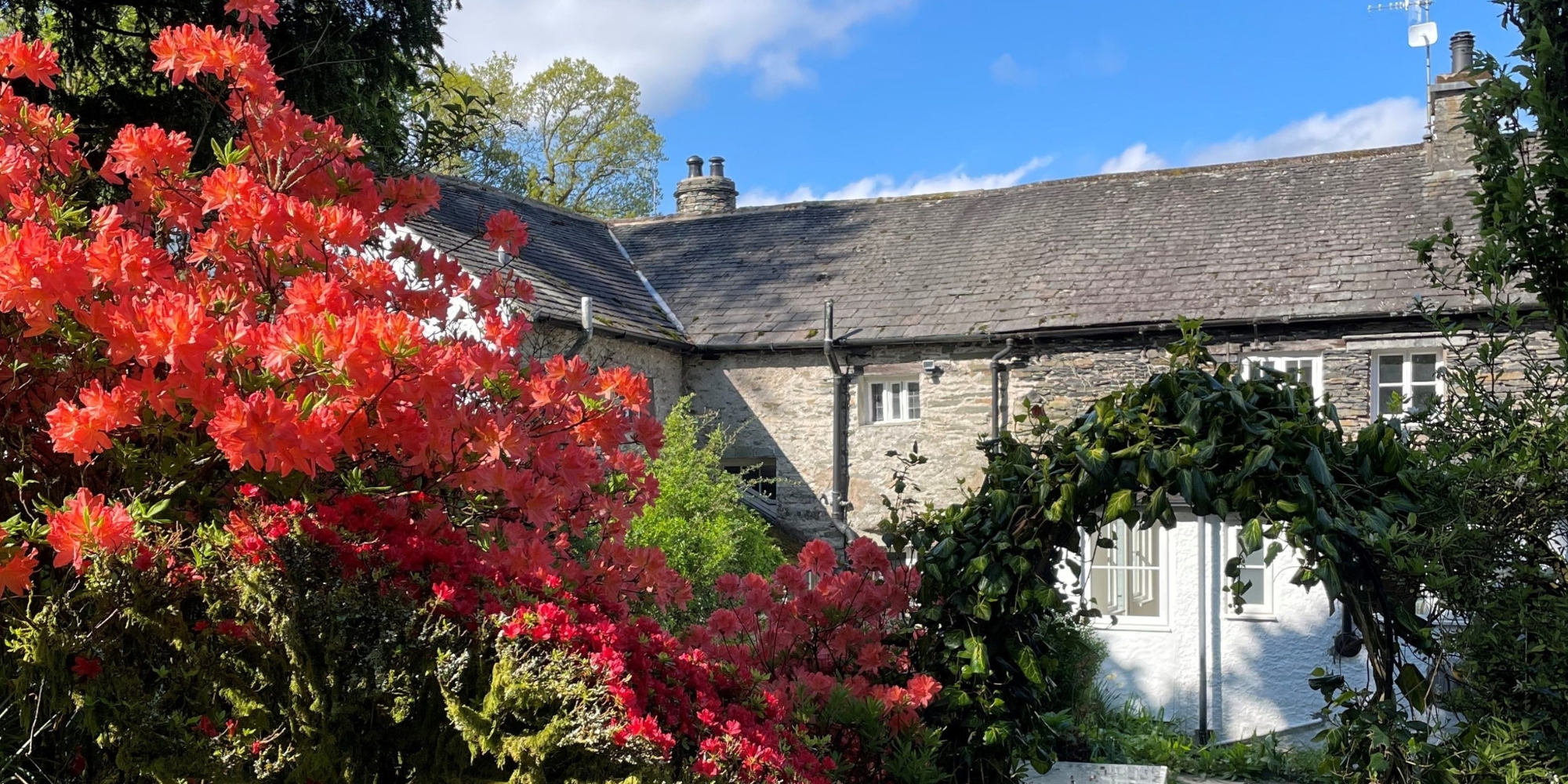
Skelwith Fold
Near Ambleside, well-placed for the Langdale valley, Elterwater and the Brathay. Woodland access from the door, and Windermere within easy reach.
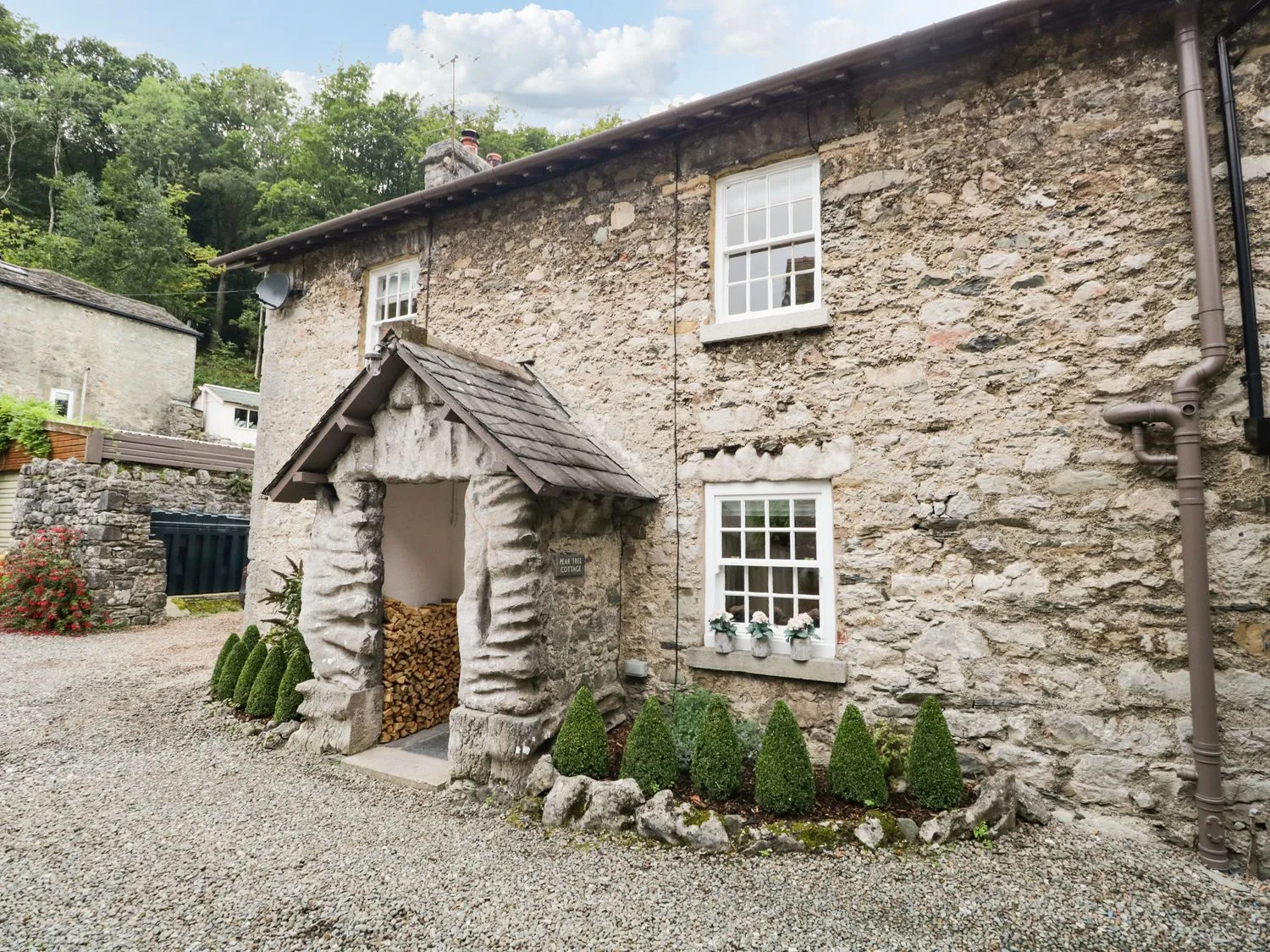
The Cartmel Cottage
In the village of Cartmel, on the southern edge of the Lake District. Good access to Grizedale Forest and the Coniston Water walks. Cartmel village is a destination in itself.
Livestock and practical notes
Sheep grazing is a constant in the Lake District valley landscape and makes the dog management situation significantly more complex than in many other UK walking regions. Herdwick sheep graze the fells and the valley floors; they appear on and beside most paths. The practical discipline for a Lake District holiday with a dog is: lead on by default, and off-lead only when you've confirmed there are no sheep in the field or valley section ahead.
Lake District walking — what to know
-
Herdwick sheep are everywhere Including on and beside open paths. The National Trust designates lead-required sections on their land; beyond that, use your judgement.
-
The lake shore paths are often livestock-free The immediate lake shore and woodland sections tend to be managed separately from the grazing land. Check at the start of each section.
-
Lambing season March through May — the most sensitive period. Lead through all farmland sections during this time without exception.
-
Swimming is excellent The lakes are clean and most have accessible shores. Derwentwater, Buttermere, and the River Brathay in Langdale are particular highlights. Wild swimming with a dog is one of the pleasures of this landscape — our swimming guide covers the best spots.
-
Parking is the constraint in summer The main valley car parks fill early on fine days in July and August. Arriving before 9am is the practical solution for Borrowdale, Langdale and Buttermere particularly.
For more on the Lake District as a whole with a dog — fell walks, day trips and the wider region — our Lake District guide covers the broader picture.