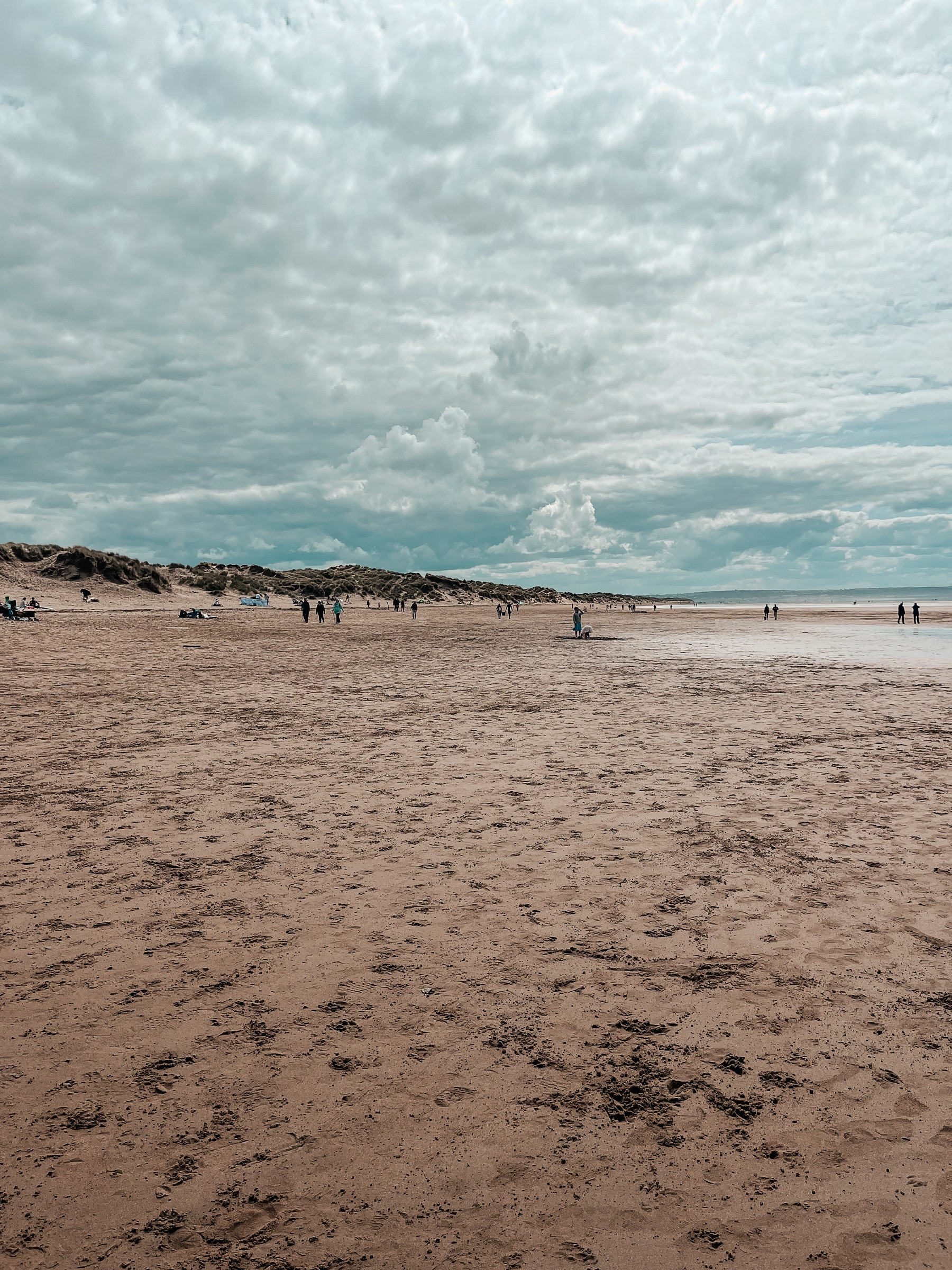
We park at the main Saunton car park, close enough to the café that a coffee before we start feels less like a treat and more like the obvious first move. From here the beach just goes, three and a half miles of it stretching south toward Crow Point, and even on a packed August Saturday there’s enough room that you stop noticing other people within the first five minutes.
The tide changes everything
The tide does something dramatic here. At low water the sea pulls back as much as 500 metres, leaving an enormous stretch of firm, flat sand that our dog treats like an invitation rather than a beach. We’ve learned to check the tide times before we leave the house, since the difference between a walk at low tide and one at high tide is close to two different beaches.
Surfing first
We surf first, weather allowing. Saunton’s waves are long and slow rather than dramatic, which is exactly why it’s such a good beach to learn on. There’s a small surf museum in Braunton village too, the Museum of British Surfing, worth an hour if the swell’s flat and you need something to do instead.
Then the dog’s turn
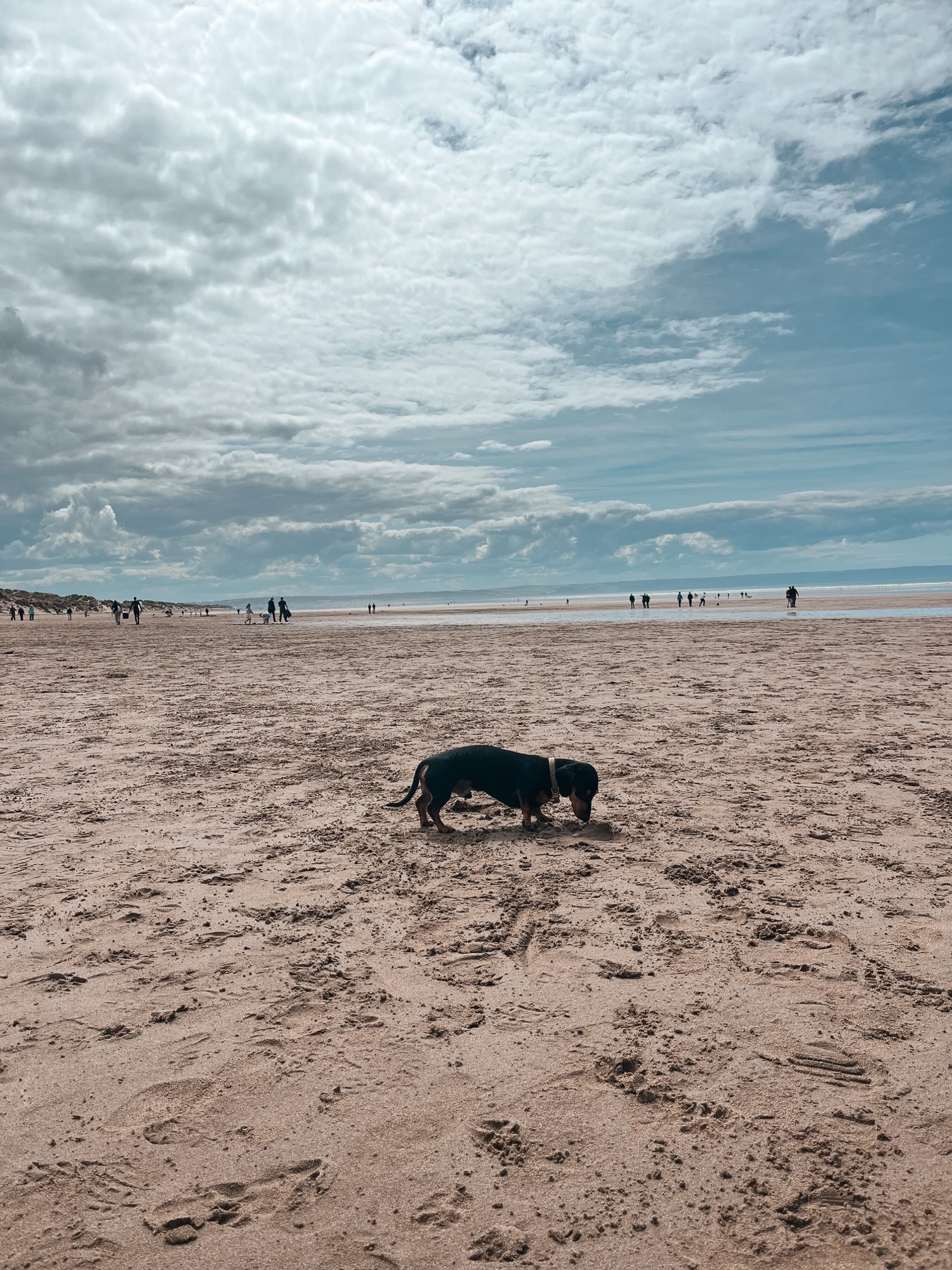
Once we’re out of the water, the dog gets his turn, and this is where Saunton earns its reputation: it’s dog-friendly all year round, no seasonal ban like so many beaches further along this coast enforce through summer, a pattern our wider guide to Devon’s beaches covers in more depth. The only actual restriction is a lead requirement near the beach huts at the northern end and a small no-dogs section right by the slipway. Everything south of that is open, and with three and a half miles of sand to choose from, that’s rarely a problem.
South toward the dunes, and a bit of D-Day history
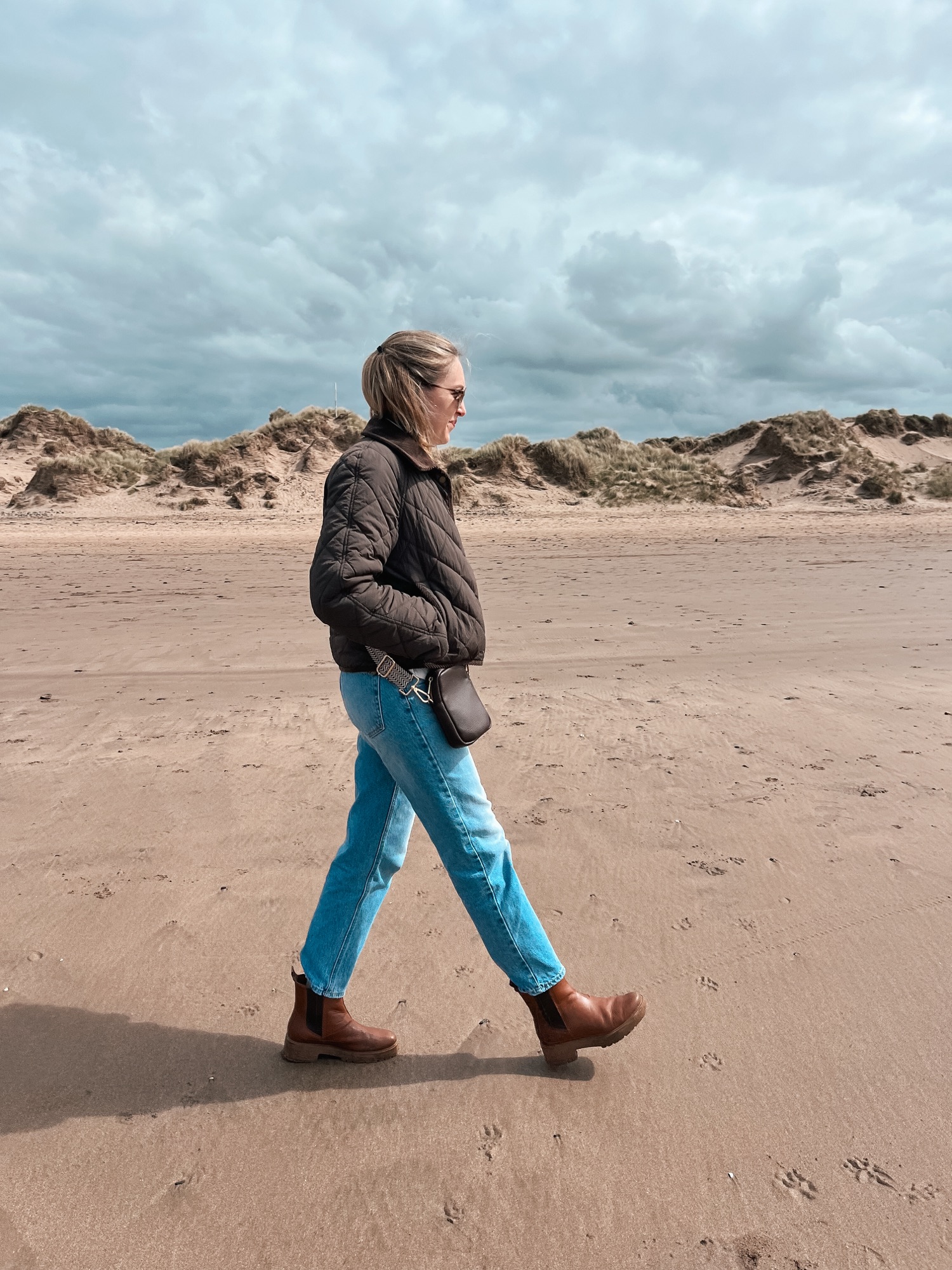
Walking south, the dunes of Braunton Burrows rise up on your right, the largest sand dune system in England and a UNESCO Biosphere Reserve, home to one of the last surviving examples of medieval open-field strip farming anywhere in England. American troops trained here for D-Day in 1943 and 1944, and although the beach itself shows no trace of it now, concrete landing-craft mock-ups are still scattered through the dunes, and a local group re-enacts the landings every June with a procession down from the Burrows to the sand, worth timing a visit around if you’re ever here that week.
Toward Crow Point, if there’s time
Keep walking and the crowds thin out fast. By the time you’re most of the way to Crow Point you’ll likely have the beach almost to yourselves, just sand, dunes and whatever the tide’s left behind. It’s a serious leg-stretcher of a walk if you go all the way, and we don’t always make it.
Where to base yourself
If a dog only gets one enormous North Devon beach this trip, Saunton is the one that works whatever the season, tide table checked first. The cottages we curate across Devon reach into this corner too, from Instow and Appledore across the estuary to Mortehoe further up the coast.