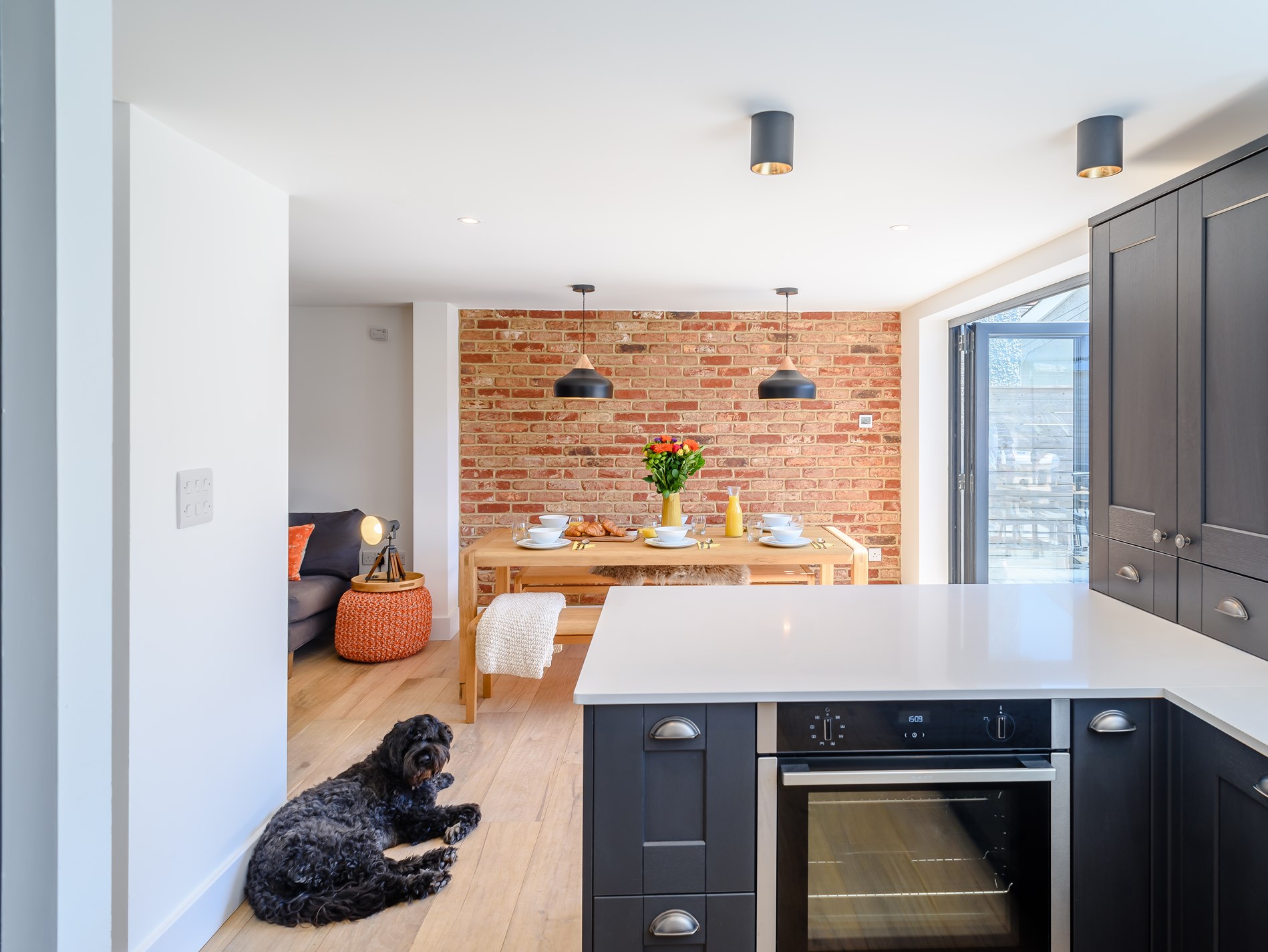
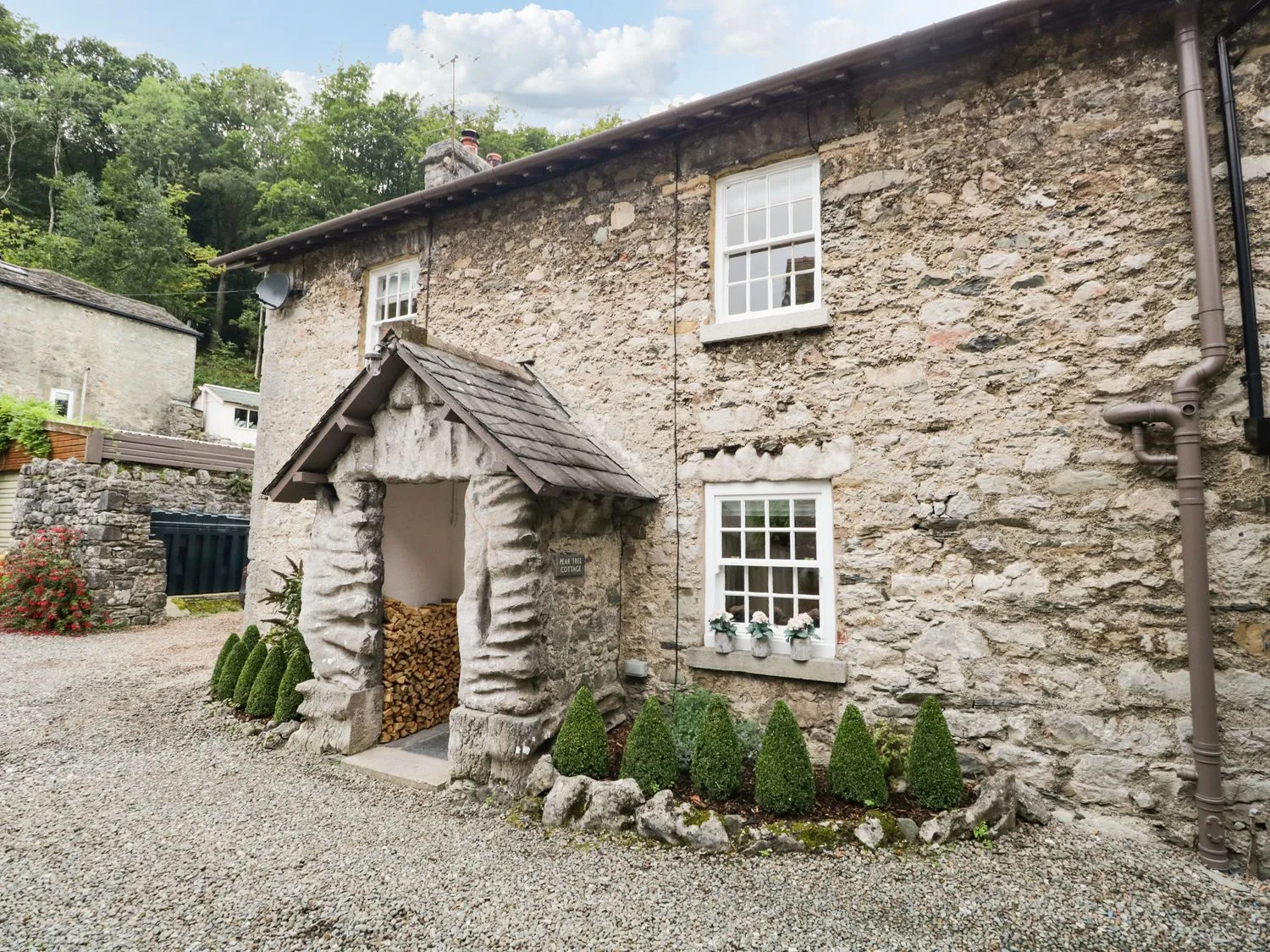
For a senior dog, the most important cottage features almost never appear on listings: a single-storey layout or ground-floor bedroom, hard floors with rugs for grip, and step-free access from car to door to garden. Quieter, flatter regions — Suffolk, the Norfolk Broads, the Brecon foothills, the Forest of Dean — work better than the dramatic ones.
A six-year-old Labrador and a twelve-year-old Labrador can holiday in the same cottage. They will not have the same week. The first will sprint up the stairs to the bedroom; the second will hesitate, then refuse, then wait at the bottom while you carry her. The first will leap from the back of the car; the second will need help, twice a day, every day of the trip.
The dog-friendly cottage market is built around the first dog. Listings advertise hot tubs, sea views, and hill walks. They rarely mention the things that decide whether a senior dog has a good week or a difficult one.
What changes with age
Most dogs over ten manage some combination of stiffer joints, weaker hindquarters, slightly impaired hearing, and reduced thermoregulation. None of this is unmanageable. All of it changes what kind of place is right for them.
The standard "dog-friendly" feature set — enclosed garden, dog towel, welcome treat — is written for younger animals. For an older dog, the features that decide the trip are physical: how many stairs there are, what surface they walk on, how steep the path to the front door is, whether they can get to the garden without help at four in the morning.
The best holiday for an older dog isn't the most dramatic one. It's the one where they get to be fully themselves — slowly, and without apology.
The cottage features that matter
If you read one section of this article, read this one. These four features change the trip more than anything else, and only the first appears on most listings.
Single-storey layout, or a ground-floor bedroom
A dog with stiff joints will navigate stairs, but not without effort and not without paying for it the next morning. A cottage where your dog has to climb a staircase to reach you at night, or descend one to get outside, is a cottage that builds discomfort into every day. Look for a single-storey property, a barn conversion with everything on one level, or a cottage with a downstairs bedroom or snug that can serve as one.
Hard floors with rugs in resting areas
A dog whose back legs are weakening needs grip. Deep-pile carpet looks warm but pulls at uneven gait; fully tiled floors with no rugs are slippery. The right combination is hard floors for ease of movement with rugs where your dog will rest. Some owners bring a non-slip mat for the kitchen. It's worth asking the property owner what the floors are actually made of — listing photos can flatter both extremes.
Step-free access, end to end
Look at three transitions: car to front door, front door to bedroom, kitchen to garden. A long gravel driveway is tiring on arthritic joints. Three steps to a back garden is a negotiation every single time at four in the morning. The cottage where every transition is flat — even if it looks plain in photographs — is a different holiday.
Gentle terrain within walking distance
An older dog still wants to walk. They just want to walk on the flat. A cottage opening onto a level lane, a beach at low tide, or a forest track without elevation gain is worth more than one with dramatic but demanding scenery. Drop a pin and look at OS maps before you book. The contour lines tell you everything.
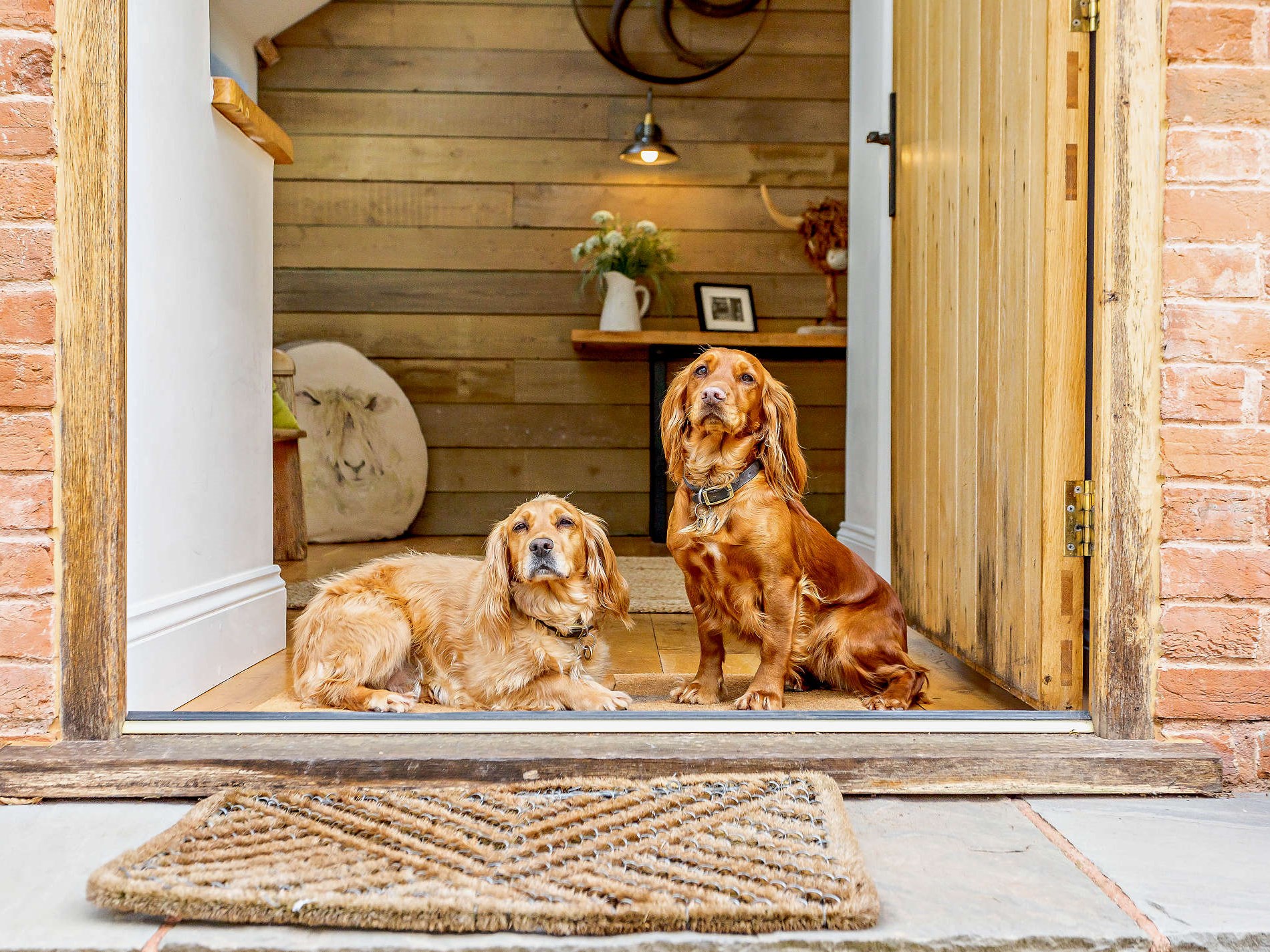
The Payhembury Farmhouse
Single-storey barn conversion. Everything on one level, no stairs, gentle Devon countryside from the door.
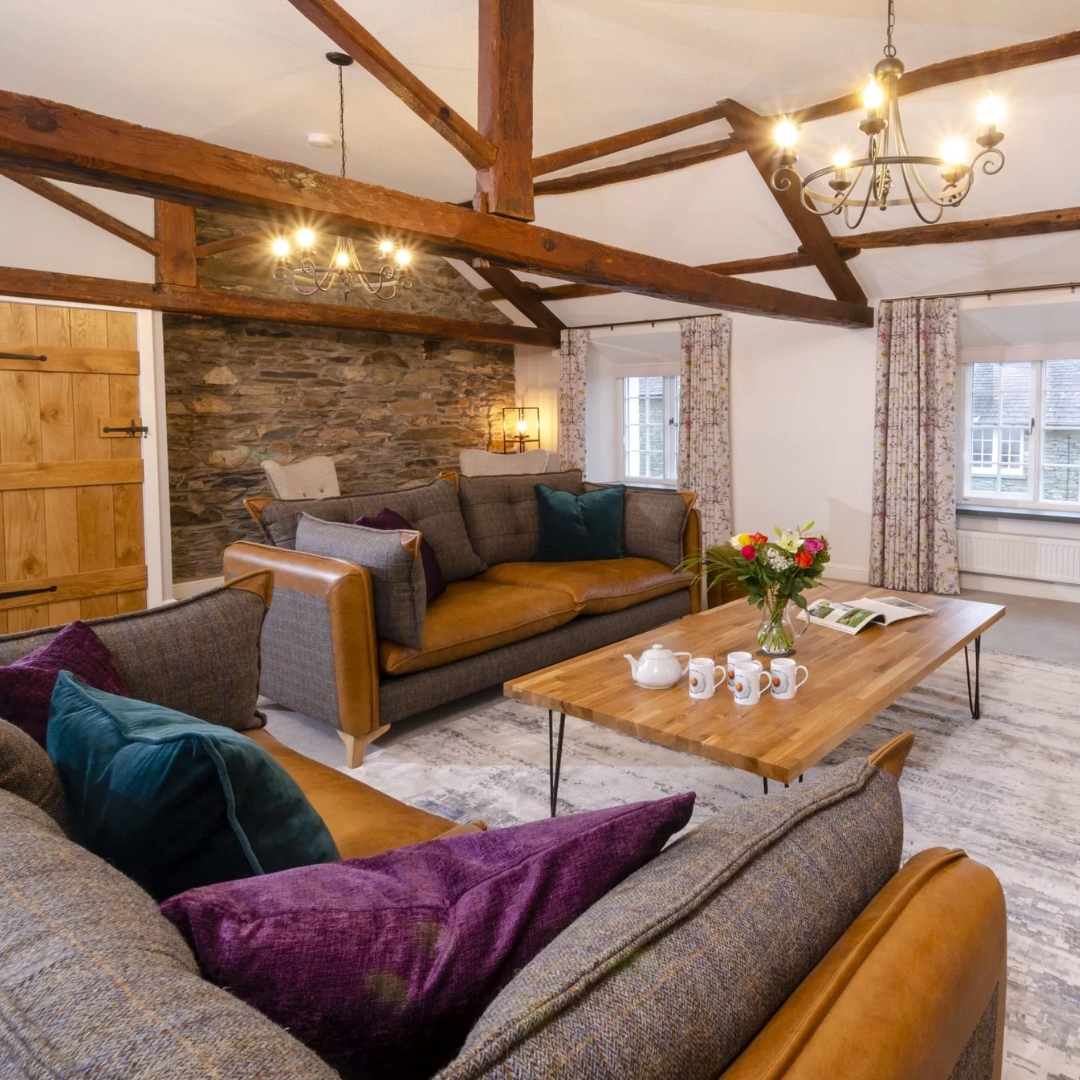
Skelwith Fold
Ground-floor bedroom, hard floors with rugs, level access to garden. Flat lakeside walks at Loughrigg Tarn nearby.
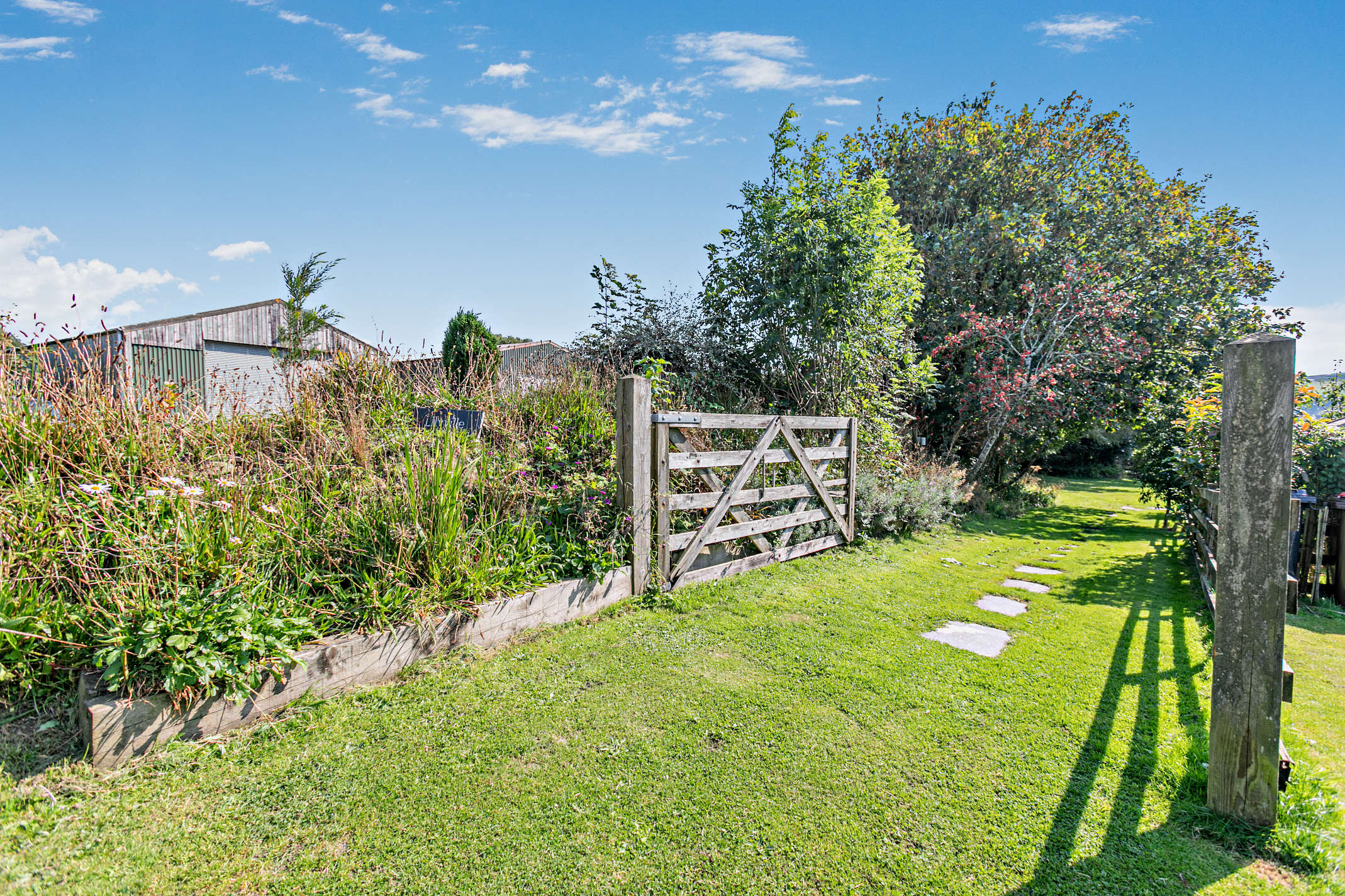
Lilyville
Step-free patio, secure level garden, country lanes rather than coast paths. A quiet base for unhurried days.
Questions to ask before you book
Owners of holiday cottages are, in general, candid. They've answered every kind of question. The good ones won't be put out by these. An owner who is, is telling you something useful.
Six questions worth asking
-
Is there a bedroom accessible without stairs? And does the dog have run of the whole ground floor?
-
What surface are the floors? Wood, slate, tile, carpet — and are there rugs in the main rooms?
-
How far is parking from the front door? And are there steps, gravel, or a steep approach in between?
-
What's the garden access like? Step-free out of the kitchen, or up and over a threshold?
-
What's the closest flat walk? Not the most scenic. The flattest. From the door if possible.
-
Where's the nearest vet? Almost certainly not needed. Worth knowing before you need to know.
Four regions that suit a slower pace
The drama of the UK landscape — Snowdonia, the high Lakes, the Cornish cliffs — is wasted on a dog who can no longer climb. These four regions reward a different kind of trip.
Wide, marshland-fringed beaches and long shingle spits. Walberswick and Dunwich for level walks, far horizons, and almost no other dogs even in summer.
The flattest walking in England. Reedbeds, dykes, and quiet villages. Dog-friendly day-boat hire if your dog has always liked water.
Skip the high Beacons. The lower Usk valley near Abergavenny is rolling rather than steep. Scenic without being demanding.
Well-maintained forestry tracks, almost no elevation, dense quiet woodland. Absorbing for a dog without being tiring.
The first 24 hours
Older dogs adjust to new places more slowly. Three things help, and a fourth makes the difference between a settled trip and an unsettled one.
Keep their routine. Same feeding times, same order of events morning and evening. Routine tells an older dog the world is still organised correctly, even when the smells are wrong.
Bring their bed and a blanket from home. Their own scent is their anchor. Place the bed against a wall where they can see the door. They settle faster.
Make day one short. Don't drive to the beach. Let them explore the cottage, the garden, the lane outside. Save the longer walk for day two when they've slept once in the new place.
Watch their thresholds. An older dog is often less able to communicate when they've had enough. They keep going out of loyalty and pay for it the next morning. Turn back ten minutes before you think you need to. You'll know your dog's tells. Trust them.
A last thought
There's a particular tenderness to a holiday with an older dog. You're trying to give them something good — a week of slow mornings, familiar smells, walks at a pace that doesn't hurt. The instinct is right. Finding the cottage to match is the harder part.
If you'd like us to find it for you, tell us about your dog — their age, their pace, what they love. We'll send a single recommendation we believe is right for where they are now. No fee, no algorithm. Just somebody who has thought about it carefully.